
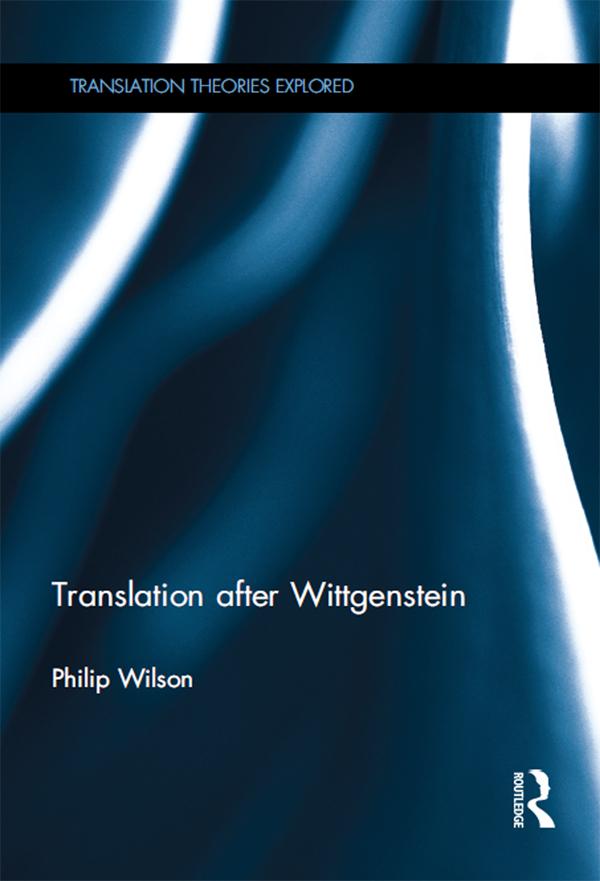
In this eminently readable study, Philip Wilson explores the later writings of Ludwig Wittgenstein and shows how a reading of this philosophy can enable the translation theorist and the practising translator to reflect upon and improve the phenomenon of translation. Wittgenstein, whilst a key figure in twentieth-century philosophy, remains peripheral to the field of translation studies and Wilson argues that his later work, because it deals with the nature of language and meaning, is potentially of great significance and an awareness of this can change translation, both literary and non-literary.
Wittgenstein’s life and thought is treated in the introduction, where it is shown how his methods can be applied to areas outside philosophy. The central three chapters of the book survey: the reading of the source text for translation; the writing of the target text; the theorisation of the target text. The author demonstrates how tools from Wittgenstein’s work can be of use in translation studies: the notion of the language-game, for example, helps us to understand meaning by looking at the way that words are used, and this can both help us describe translation and suggest ways of translating.
A wide variety of examples and case studies is given throughout the book, from both literary and non-literary sources. Aimed at translation studies scholars, graduate students and researchers, this interdisciplinary book will also be of interest to scholars of philosophy and literature.
Betala smidigt med kort, Klarna, Apple Pay eller Google Pay. Är du inte nöjd har du alltid 14 dagars ångerrätt. Läs mer i våra villkor. Har du några frågor, mejla oss på hello@memmo.org.
Memmo gör det enklare att plugga – var du än är i världen. Hos oss samlar du kursböcker och smarta studieverktyg på ett och samma ställe: sammanfattningar, quiz, poddar och flashcards. Och så Ted, din studiekompis som svarar på allt du undrar. Över 75 000 studenter pluggar redan här – byggt för att du ska lära dig snabbare och stressa mindre.