
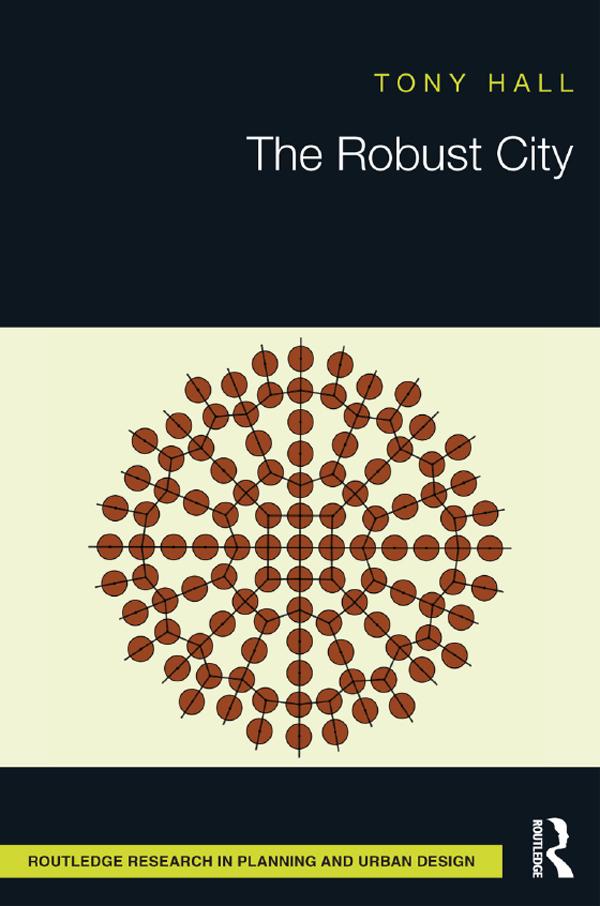
Cities expand, upwards and outwards, and their physical structure can last a very long time, not just tens but hundreds of years. Nevertheless, they are rarely designed for expansion. Their layout does not allow for extension or for the retrofitting of infrastructure and can constrain, and often prevent, the growth and change of activities within them - cities are not 'robust' in their design. In other words, change is not planned for but involves costly reconstruction.
The Robust City argues that a robust, expandable and sustainable urban form can be deduced from planning goals. Development should not just follow public transport corridors but should not be allowed beyond walking distance from them. This would create 'green enclaves' that would permit not only recreational access but also the retrofitting of infrastructure and the efficient circulation of motor vehicles. The same principles could also be applied within neighbourhoods and to facilitate the rational handling of urban intensification.
Betala smidigt med kort, Klarna, Apple Pay eller Google Pay. Är du inte nöjd har du alltid 14 dagars ångerrätt. Läs mer i våra villkor. Har du några frågor, mejla oss på hello@memmo.org.
Memmo gör det enklare att plugga – var du än är i världen. Hos oss samlar du kursböcker och smarta studieverktyg på ett och samma ställe: sammanfattningar, quiz, poddar och flashcards. Och så Ted, din studiekompis som svarar på allt du undrar. Över 75 000 studenter pluggar redan här – byggt för att du ska lära dig snabbare och stressa mindre.