
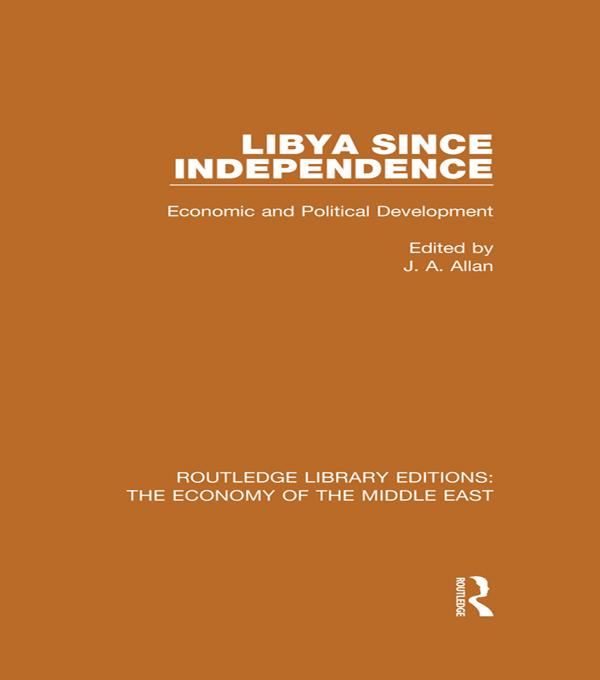
Since its independence in 1951, Libya has experienced rapid economic and social change. Many of these developments, though dramatic, have not been comprehensively documented until now. One of the problems that Libya has had to face has been the absorption of burgeoning oil revenues, and here the Libyan experience accords with that of other oil-rich states. The country has embarked on ambitious policies based on oil wealth; this book charts the development of traditional agricultural way of life, and the growth of new industrial projects and transport systems. The effect of Libya’s new wealth on its social and political systems is also considered in detail. In conclusion, the importance of Libya’s frontiers are discussed; although Libyan international interests have been wide-ranging in recent years, its real external interests are to extend its natural resource base, for its future developments will be founded on Libya’s perception of its territorial entitlement.
First published in 1982.
Betala smidigt med kort, Klarna, Apple Pay eller Google Pay. Är du inte nöjd har du alltid 14 dagars ångerrätt. Läs mer i våra villkor. Har du några frågor, mejla oss på hello@memmo.org.
Memmo gör det enklare att plugga – var du än är i världen. Hos oss samlar du kursböcker och smarta studieverktyg på ett och samma ställe: sammanfattningar, quiz, poddar och flashcards. Och så Ted, din studiekompis som svarar på allt du undrar. Över 50 000 studenter pluggar redan här – byggt för att du ska lära dig snabbare och stressa mindre.