
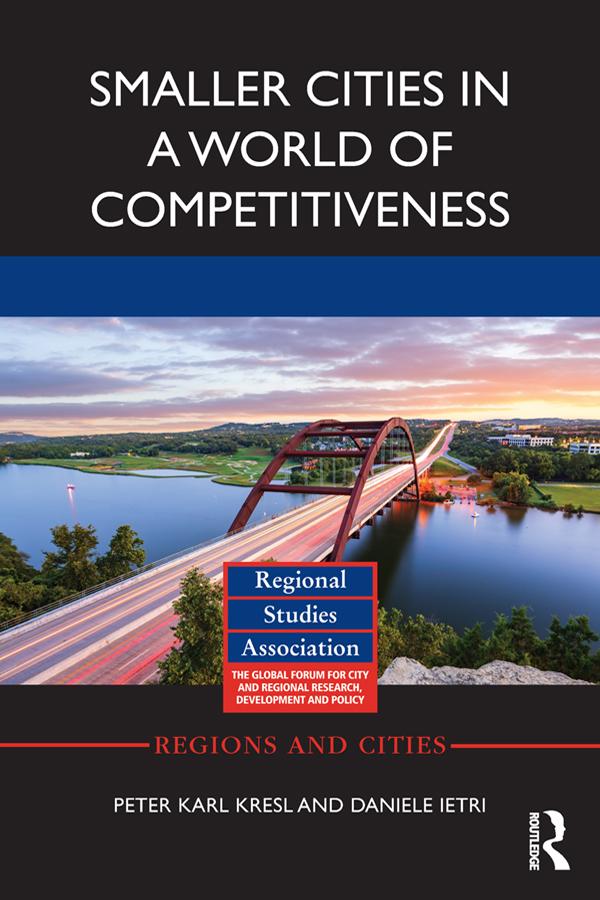
Much recent research in Urban Studies has concentrated on the notion of the ‘global city’ but discussion has also covered a larger set of mega cities, with populations in excess of 10 million. This analysis has begged the question of the optimal size for a city – is larger always better?
Smaller Cities explores the advantages and disadvantages of different sized cities, trying to determine their place in the global economy and hierarchy. How can smaller cities gain or retain their competitiveness in a world of large cities? In a globalized world, the nation has perhaps been diminished as an economic actor, with fiscal shortcomings and political gridlock leaving cities more or less on their own in the task of enhancing their competitiveness and improving the economic lives of their residents. This book argues that smaller cities of varying population can be important actors in competitiveness and aims to bring attention to an area often overlooked by researchers. In short, are Pittsburgh, San Diego and Austin less competitive than London and Mumbai?
This volume will be of interest to students, researchers, and city professionals who work in urban economy and urban geography.
Betala smidigt med kort, Klarna, Apple Pay eller Google Pay. Är du inte nöjd har du alltid 14 dagars ångerrätt. Läs mer i våra villkor. Har du några frågor, mejla oss på hello@memmo.org.
Memmo gör det enklare att plugga – var du än är i världen. Hos oss samlar du kursböcker och smarta studieverktyg på ett och samma ställe: sammanfattningar, quiz, poddar och flashcards. Och så Ted, din studiekompis som svarar på allt du undrar. Över 75 000 studenter pluggar redan här – byggt för att du ska lära dig snabbare och stressa mindre.