
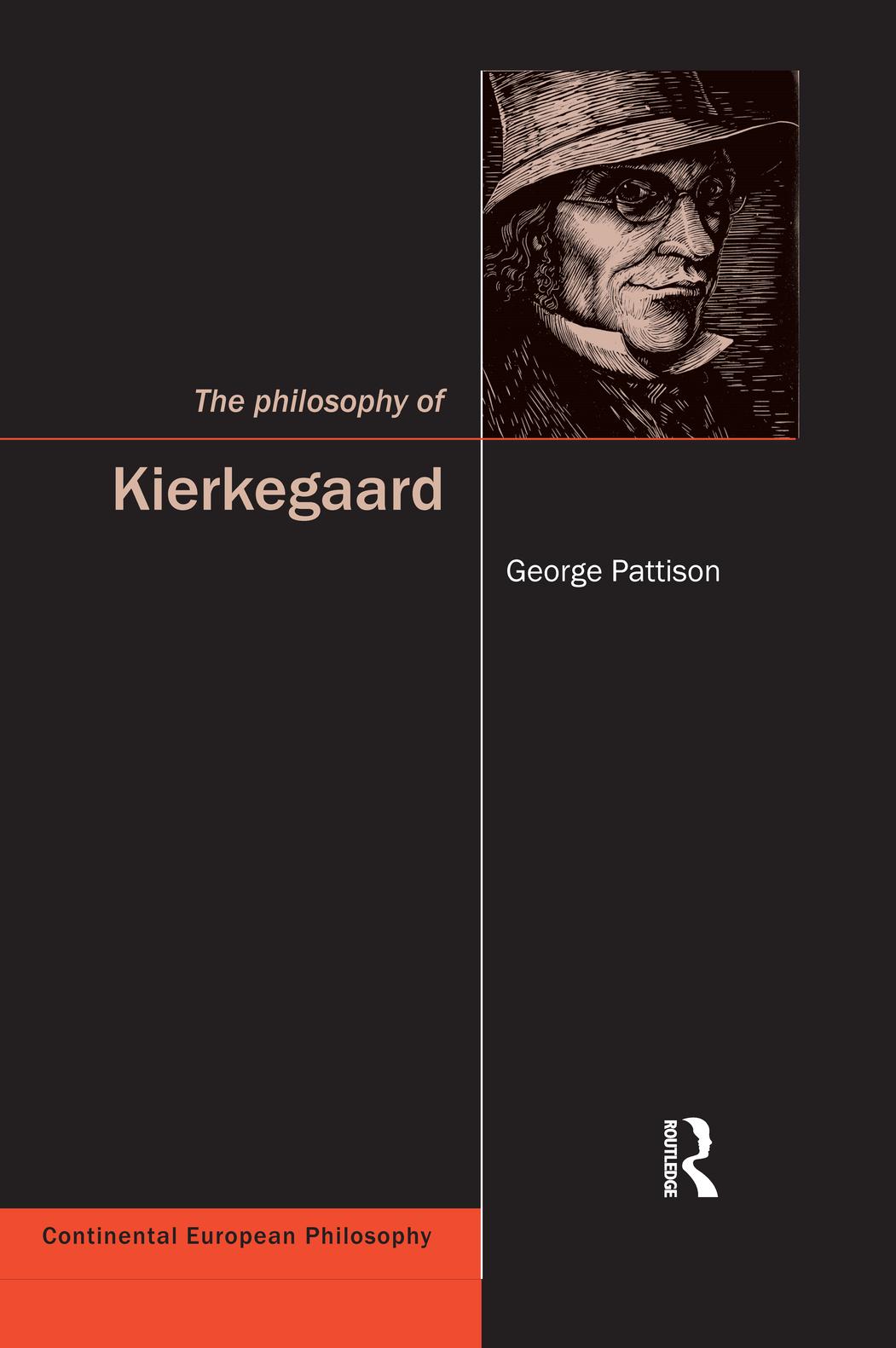
Although the ideas of Soren Kierkegaard played a pivotal role in the shaping of mainstream German philosophy and the history of French existentialism, the question of how philosophers should read Kierkegaard is a difficult one to settle. His intransigent religiosity has led some philosophers to view him as essentially a religious thinker of a singularly anti-philosophical attitude who should be left to the theologians. In this major new survey of Kierkegaard's thought, George Pattison addresses this question head on and shows that although it would be difficult to claim a "philosophy of Kierkegaard" as one could a philosophy of Kant, or of Hegel, there are nevertheless significant points of common interest between Kierkegaard's central thinking and the questions that concern philosophers today. The challenge of self-knowledge in an age of moral and intellectual uncertainty that lies at the heart of Kierkegaard's writings remains as important today as it did in the culture of post-Enlightenment modernity.
Betala smidigt med kort, Klarna, Apple Pay eller Google Pay. Är du inte nöjd har du alltid 14 dagars ångerrätt. Läs mer i våra villkor. Har du några frågor, mejla oss på hello@memmo.org.
Memmo gör det enklare att plugga – var du än är i världen. Hos oss samlar du kursböcker och smarta studieverktyg på ett och samma ställe: sammanfattningar, quiz, poddar och flashcards. Och så Ted, din studiekompis som svarar på allt du undrar. Över 50 000 studenter pluggar redan här – byggt för att du ska lära dig snabbare och stressa mindre.
Du kanske också gillar
Köp boken0