
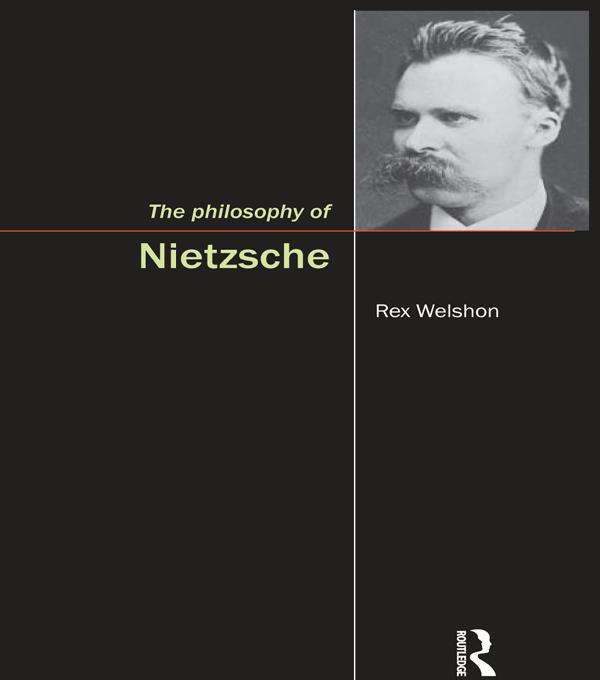
This important new introduction to Nietzsche's philosophical work provides readers with an excellent framework for understanding the central concerns of his philosophical and cultural writings. It shows how Nietzsche's ideas have had a profound influence on European philosophy and why, in recent years, Nietzsche scholarship has become the battleground for debates between the analytic and continental traditions over philosophical method. The book is divided into three parts. In the first part, the author discusses morality, religion and nihilism to show why Nietzsche rejects certain components of the Western philosophical and religious traditions as well as the implications of this rejection. In the second part, the author explores Nietzsche's ambivalent and sophisticated reflections on some of philosophy's biggest questions. These include his criticisms of metaphysics, his analysis of truth and knowledge, and his reflections on the self and consciousness. In the final section, Welshon discusses some of the ways in which Nietzsche transcends, or is thought to transcend, the Western philosophical tradition, with chapters on the will to power, politics, and the flourishing life.
Betala smidigt med kort, Klarna, Apple Pay eller Google Pay. Är du inte nöjd har du alltid 14 dagars ångerrätt. Läs mer i våra villkor. Har du några frågor, mejla oss på hello@memmo.org.
Memmo gör det enklare att plugga – var du än är i världen. Hos oss samlar du kursböcker och smarta studieverktyg på ett och samma ställe: sammanfattningar, quiz, poddar och flashcards. Och så Ted, din studiekompis som svarar på allt du undrar. Över 50 000 studenter pluggar redan här – byggt för att du ska lära dig snabbare och stressa mindre.
Du kanske också gillar
Köp boken0