
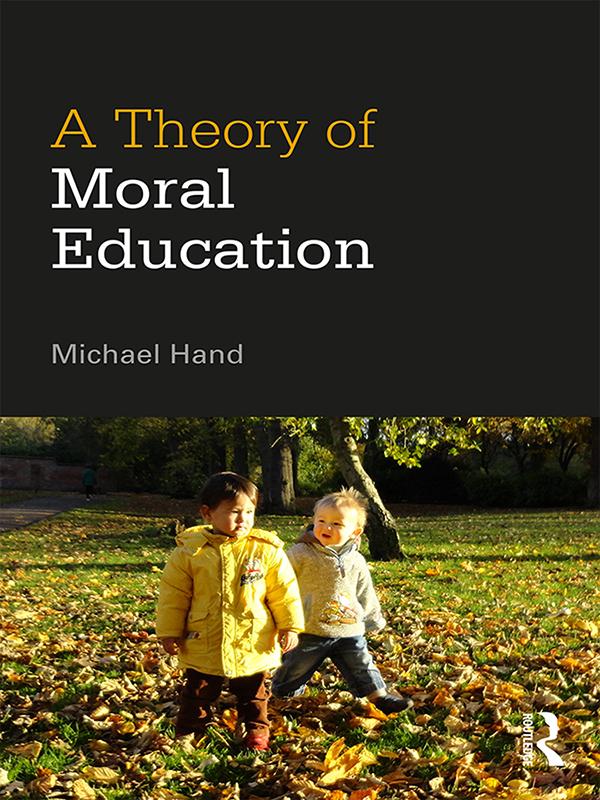
Children must be taught morality. They must be taught to recognise the authority of moral standards and to understand what makes them authoritative. But there’s a problem: the content and justification of morality are matters of reasonable disagreement among reasonable people. This makes it hard to see how educators can secure children’s commitment to moral standards without indoctrinating them.
In A Theory of Moral Education, Michael Hand tackles this problem head on. He sets out to show that moral education can and should be fully rational. It is true that many moral standards and justificatory theories are controversial, and educators have an obligation to teach these nondirectively, with the aim of enabling children to form their own considered views. But reasonable moral disagreement does not go all the way down: some basic moral standards are robustly justified, and these should be taught directively, with the aim of bringing children to recognise and understand their authority.
This is an original and important contribution to the philosophy of moral education, which lays a new theoretical foundation for the urgent practical task of teaching right from wrong.
Betala smidigt med kort, Klarna, Apple Pay eller Google Pay. Är du inte nöjd har du alltid 14 dagars ångerrätt. Läs mer i våra villkor. Har du några frågor, mejla oss på hello@memmo.org.
Memmo gör det enklare att plugga – var du än är i världen. Hos oss samlar du kursböcker och smarta studieverktyg på ett och samma ställe: sammanfattningar, quiz, poddar och flashcards. Och så Ted, din studiekompis som svarar på allt du undrar. Över 50 000 studenter pluggar redan här – byggt för att du ska lära dig snabbare och stressa mindre.