
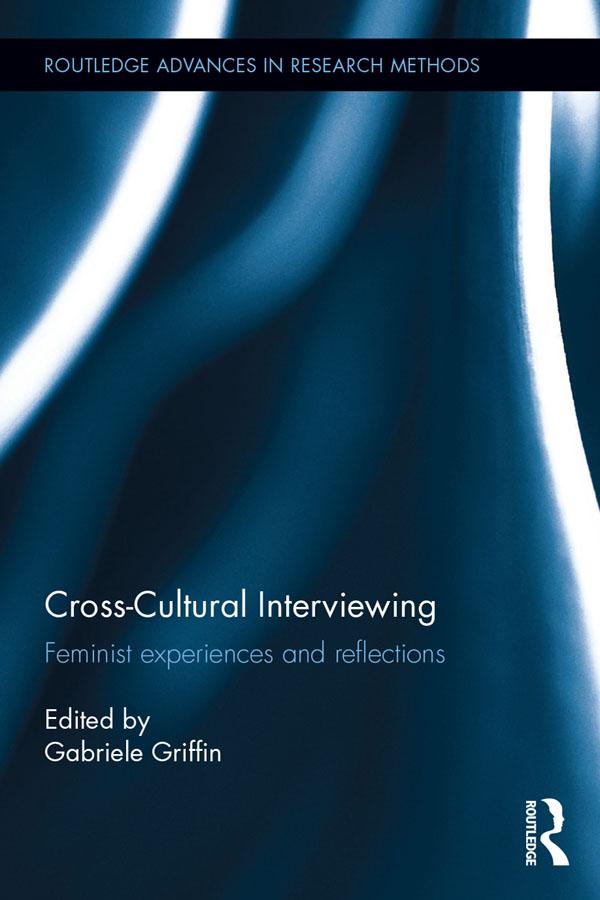
Interviewing is one of the most common techniques used to conduct qualitative research in the social sciences and humanities. As a result of globalization, researchers increasingly conduct interviews cross-, inter- and intra-nationally. This raises important questions about how differences and sameness are understood and negotiated within the interview situation, as well as the power structures at play within qualitative research, and the role that reflexivity plays in mediating these.
What does it mean to interview Black women as a Black woman? How is ethnicity negotiated across various qualitative research encounters? How are differences bridged or asserted in feminist interviewing? These are just some of the questions explored in the chapters in this volume. Drawing on their recent research, the contributors detail their experiences of engaging in qualitative interviewing and examine how they negotiated the various dilemmas they encountered. The contributions challenge some of the assumptions made in early feminist work on interviewing, providing nuanced accounts of actual research experiences.
This volume explores the practice and implications of conducting cross-, inter- and intra-cultural interviewing, bringing together researchers from a range of disciplines and countries to describe and analyse both its vicissitudes and its advantages.
Betala smidigt med kort, Klarna, Apple Pay eller Google Pay. Är du inte nöjd har du alltid 14 dagars ångerrätt. Läs mer i våra villkor. Har du några frågor, mejla oss på hello@memmo.org.
Memmo gör det enklare att plugga – var du än är i världen. Hos oss samlar du kursböcker och smarta studieverktyg på ett och samma ställe: sammanfattningar, quiz, poddar och flashcards. Och så Ted, din studiekompis som svarar på allt du undrar. Över 50 000 studenter pluggar redan här – byggt för att du ska lära dig snabbare och stressa mindre.