
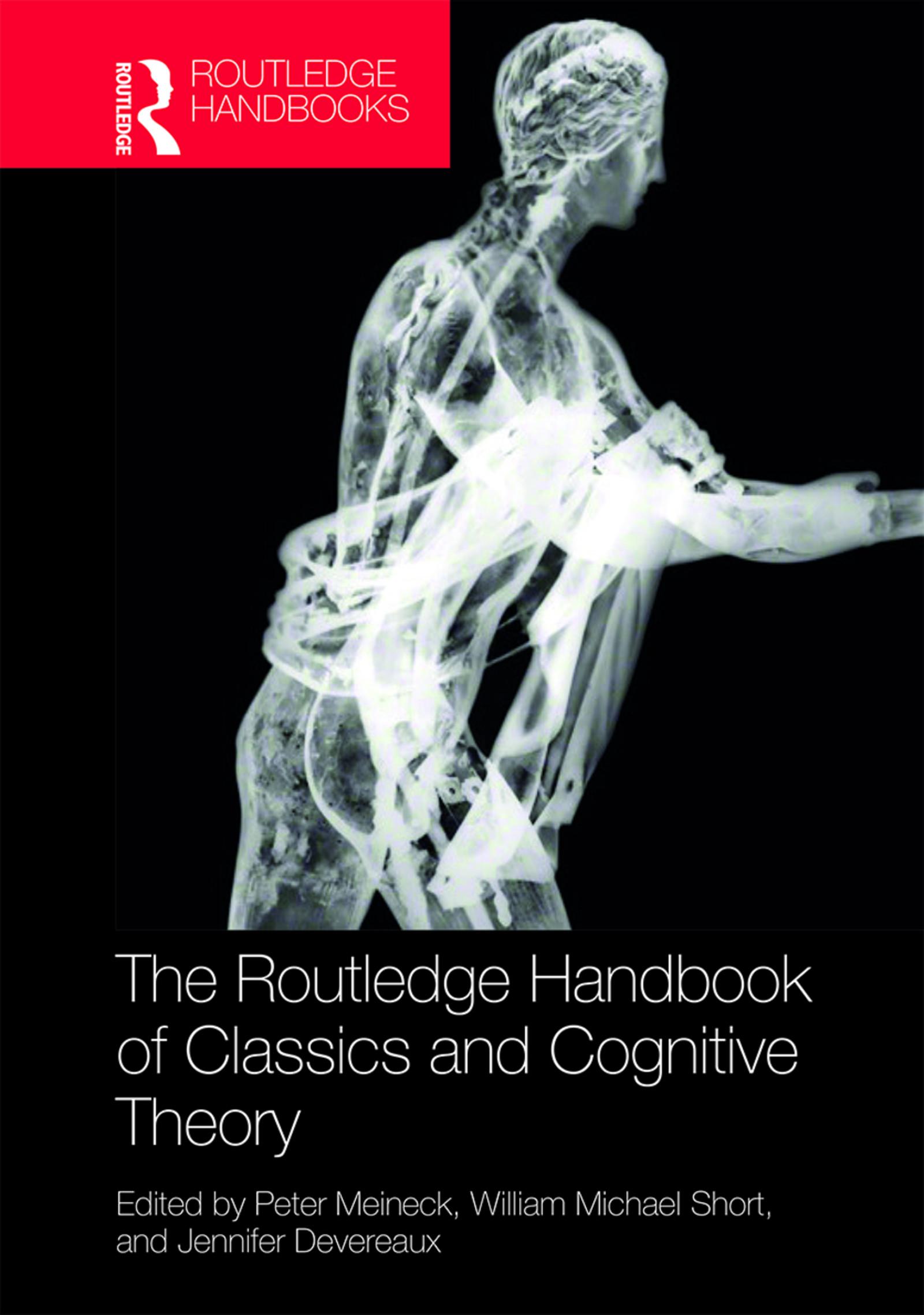
The Routledge Handbook of Classics and Cognitive Theory is an interdisciplinary volume that examines the application of cognitive theory to the study of the classical world, across several interrelated areas including linguistics, literary theory, social practices, performance, artificial intelligence and archaeology. With contributions from a diverse group of international scholars working in this exciting new area, the volume explores the processes of the mind drawing from research in psychology, philosophy, neuroscience, and anthropology, and interrogates the implications of these new approaches for the study of the ancient world.
Topics covered in this wide-ranging collection include: cognitive linguistics applied to Homeric and early Greek texts, Roman cultural semantics, linguistic embodiment in Latin literature, group identities in Greek lyric, cognitive dissonance in historiography, kinesthetic empathy in Sappho, artificial intelligence in Hesiod and Greek drama, the enactivism of Roman statues and memory and art in the Roman Empire.
This ground-breaking work is the first to organize the field, allowing both scholars and students access to the methodologies, bibliographies and techniques of the cognitive sciences and how they have been applied to classics.
Betala smidigt med kort, Klarna, Apple Pay eller Google Pay. Är du inte nöjd har du alltid 14 dagars ångerrätt. Läs mer i våra villkor. Har du några frågor, mejla oss på hello@memmo.org.
Memmo gör det enklare att plugga – var du än är i världen. Hos oss samlar du kursböcker och smarta studieverktyg på ett och samma ställe: sammanfattningar, quiz, poddar och flashcards. Och så Ted, din studiekompis som svarar på allt du undrar. Över 50 000 studenter pluggar redan här – byggt för att du ska lära dig snabbare och stressa mindre.