
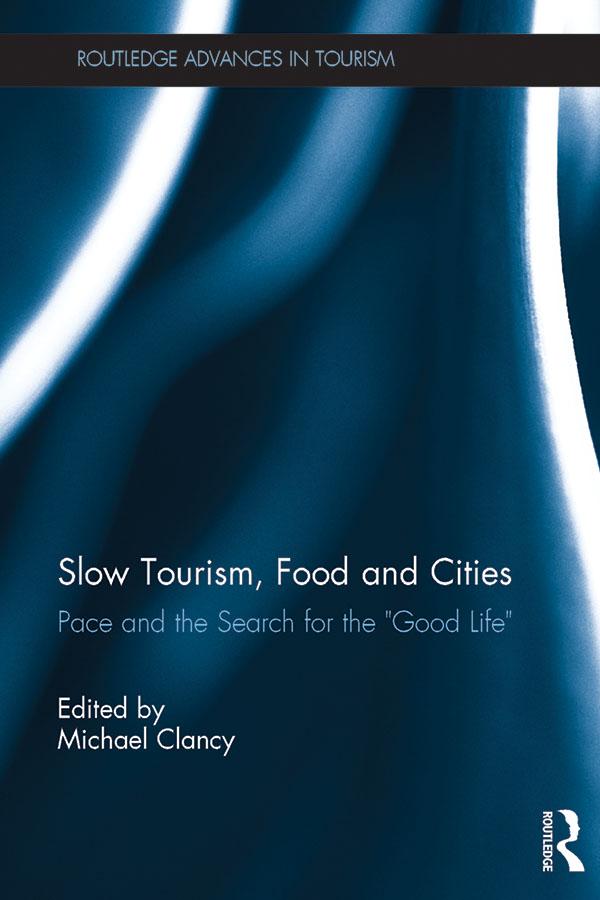
Slow Food began in the late 1980s as a response to the spread of fast food establishments and as a larger statement against globalization and the perceived deterioration of modern life. Since then, slow practices have permeated into other areas, including cities and territories and travel and tourism.
This book provides an in-depth examination of slow food, tourism and cities, demonstrating how these elements are intertwined with one other as part of the modern search for "the good life." Part 1 locates the slow concept within the larger social setting of modernity and investigates claims made by the slow movement, examining aesthetic and instrumental values inherent to it. Part 2 explores the practices and places of slow, containing both conceptual and empirical chapters in Italy, the birthplace of the movement. Part 3 provides a comparative perspective by examining the practices in Spain, the UK, Germany and Canada.
Slow Tourism, Food and Cities offers key theoretical insights and alternative perspectives on the varying practices and meanings of slow from a cultural, sociological and ethical perspective. It is a valuable text for students and scholars of sociology, geography, urban studies, social movements, travel and tourism, and food studies.
Betala smidigt med kort, Klarna, Apple Pay eller Google Pay. Är du inte nöjd har du alltid 14 dagars ångerrätt. Läs mer i våra villkor. Har du några frågor, mejla oss på hello@memmo.org.
Memmo gör det enklare att plugga – var du än är i världen. Hos oss samlar du kursböcker och smarta studieverktyg på ett och samma ställe: sammanfattningar, quiz, poddar och flashcards. Och så Ted, din studiekompis som svarar på allt du undrar. Över 50 000 studenter pluggar redan här – byggt för att du ska lära dig snabbare och stressa mindre.