
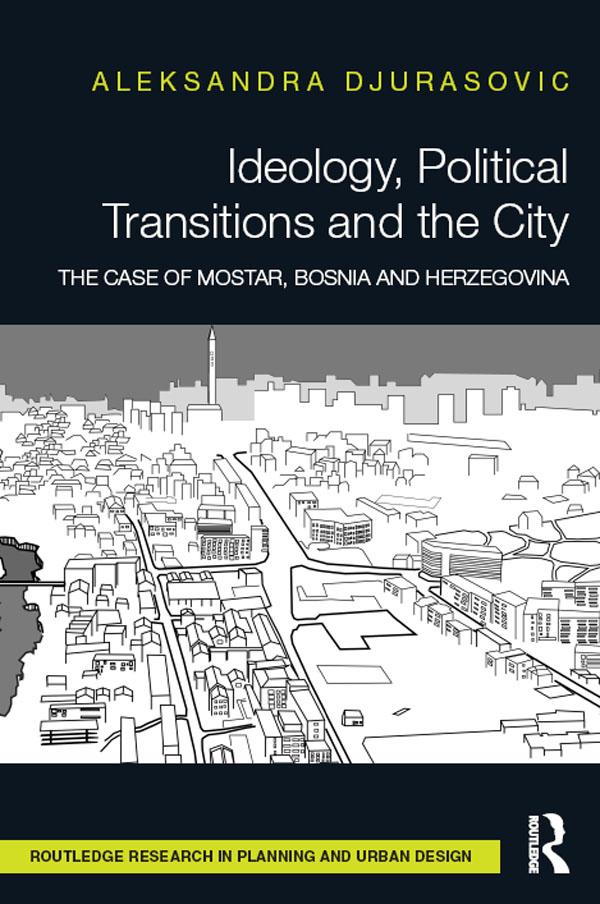
Recent history has seen Bosnian and Herzegovinian (BiH) cities undergoing several transitions. Their cities have developed under socialism (1945 – 1992), have suffered through the civil war during the 1990s, and during the last twenty years have been undergoing a slow and multifaceted transition to an indeterminate end point.
Focusing on the post-socialist, postwar, and neoliberal transitions experienced in BiH, the book shows that planning systems deviated from control-oriented and top-down regulation to flexible approaches for more open for informal development. The book analyzes several levels of planning-related processes: the former Yugoslavia, BiH, the city of Mostar, and three urban zones (the Industrial Zone Bišće Polje, the City Zone Rondo, and the Historic District and the Old Town Zone) in order to offer insights into the new planning systems in the late phase of post-socialist transition.
Betala smidigt med kort, Klarna, Apple Pay eller Google Pay. Är du inte nöjd har du alltid 14 dagars ångerrätt. Läs mer i våra villkor. Har du några frågor, mejla oss på hello@memmo.org.
Memmo gör det enklare att plugga – var du än är i världen. Hos oss samlar du kursböcker och smarta studieverktyg på ett och samma ställe: sammanfattningar, quiz, poddar och flashcards. Och så Ted, din studiekompis som svarar på allt du undrar. Över 75 000 studenter pluggar redan här – byggt för att du ska lära dig snabbare och stressa mindre.