
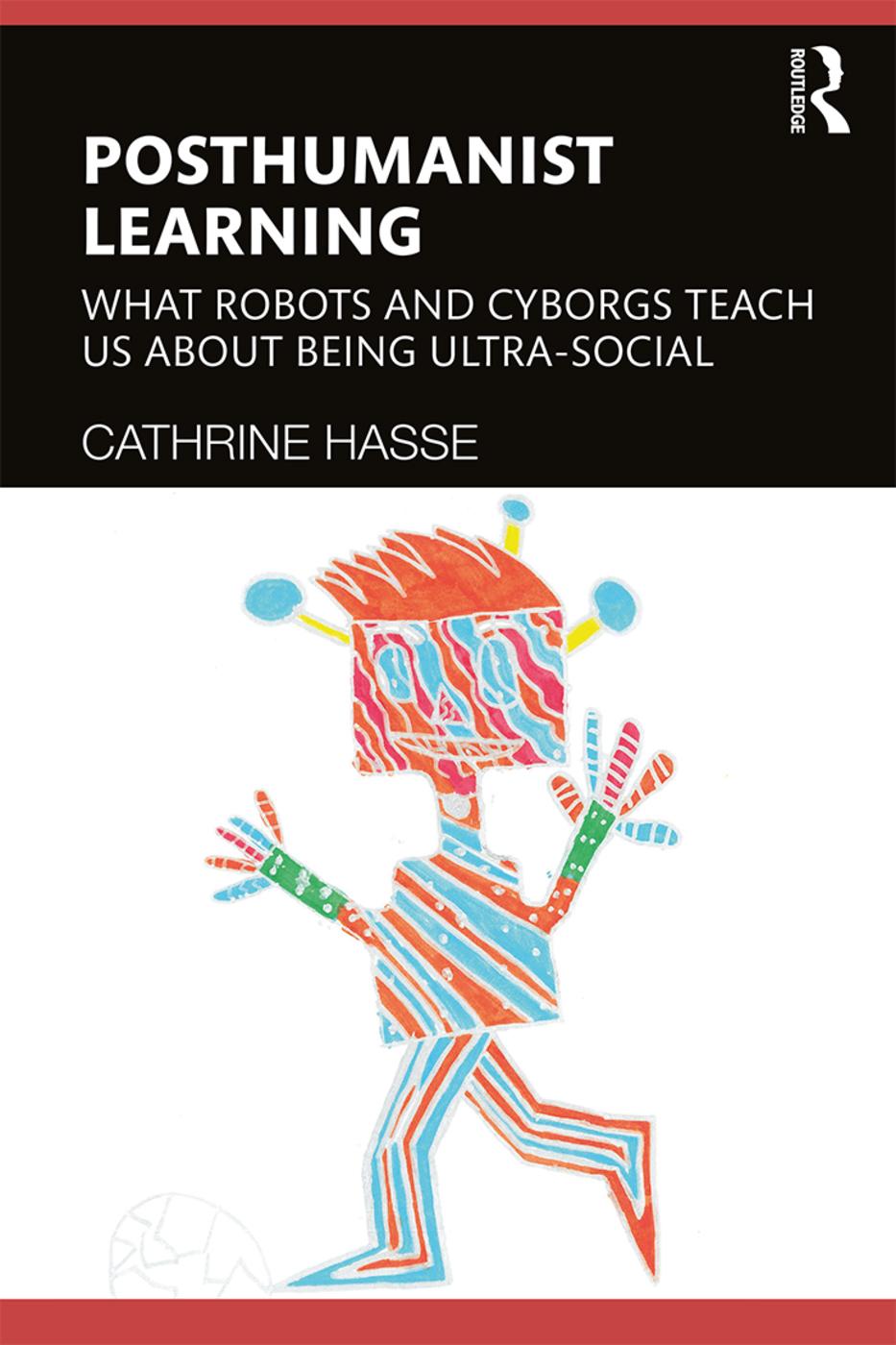
In this text Hasse presents a new, inclusive, posthuman learning theory, designed to keep up with the transformations of human learning resulting from new technological experiences, as well as considering the expanding role of cyborg devices and robots in learning. This ground-breaking book draws on research from across psychology, education, and anthropology to present a truly interdisciplinary examination of the relationship between technology, learning and humanity.
Posthumanism questions the self-evident status of human beings by exploring how technology is changing what can be categorised as "human". In this book, the author applies a posthumanist lens to traditional learning theory, challenging conventional understanding of what a human learner is, and considering how technological advances are changing how we think about this question. Throughout the book Hasse uses vignettes of her own research and that of other prominent academics to exemplify what technology can tell us about how we learn and how this can be observed in real-life settings.
Posthumanist Learning is essential reading for students and researchers of posthumanism and learning theory from a variety of backgrounds, including psychology, education, anthropology, robotics and philosophy.
Betala smidigt med kort, Klarna, Apple Pay eller Google Pay. Är du inte nöjd har du alltid 14 dagars ångerrätt. Läs mer i våra villkor. Har du några frågor, mejla oss på hello@memmo.org.
Memmo gör det enklare att plugga – var du än är i världen. Hos oss samlar du kursböcker och smarta studieverktyg på ett och samma ställe: sammanfattningar, quiz, poddar och flashcards. Och så Ted, din studiekompis som svarar på allt du undrar. Över 50 000 studenter pluggar redan här – byggt för att du ska lära dig snabbare och stressa mindre.