
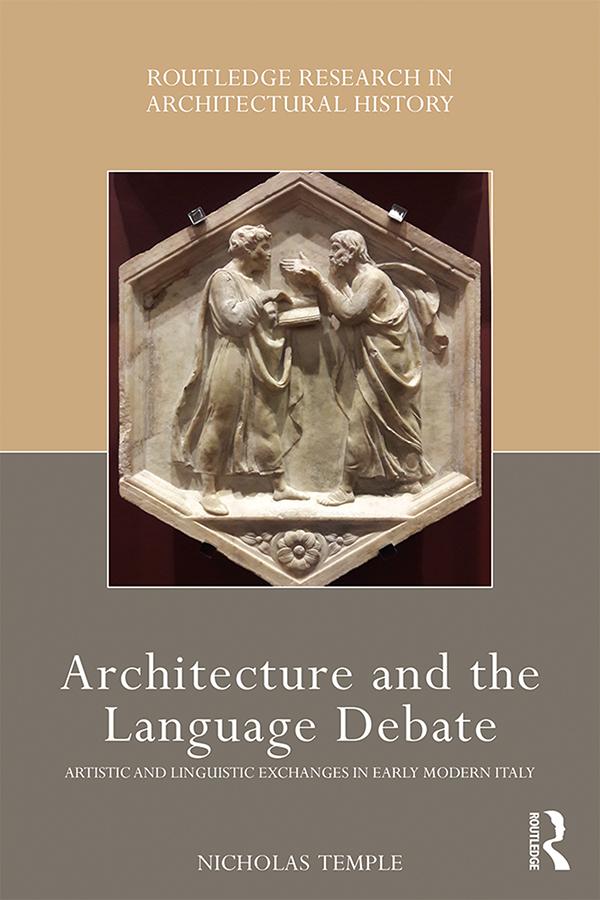
This book examines the creative exchanges between architects, artists and intellectuals, from the Early Renaissance to the beginning of the Enlightenment, in the forging of relationships between architecture and emerging concepts of language in early modern Italy. The study extends across the spectrum of linguistic disputes during this time – among members of the clergy, humanists, philosophers and polymaths – on issues of grammar, rhetoric, philology, etymology and epigraphy, and how these disputes paralleled and informed important developments in architectural thinking and practice. Drawing upon a wealth of primary source material, such as humanist tracts, philosophical works, architectural/antiquarian treatises, epigraphic/philological studies, religious sermons and grammaticae, the book traces key periods when the emerging field of linguistics in early modern Italy impacted on the theory, design and symbolism of buildings.
Betala smidigt med kort, Klarna, Apple Pay eller Google Pay. Är du inte nöjd har du alltid 14 dagars ångerrätt. Läs mer i våra villkor. Har du några frågor, mejla oss på hello@memmo.org.
Memmo gör det enklare att plugga – var du än är i världen. Hos oss samlar du kursböcker och smarta studieverktyg på ett och samma ställe: sammanfattningar, quiz, poddar och flashcards. Och så Ted, din studiekompis som svarar på allt du undrar. Över 75 000 studenter pluggar redan här – byggt för att du ska lära dig snabbare och stressa mindre.