
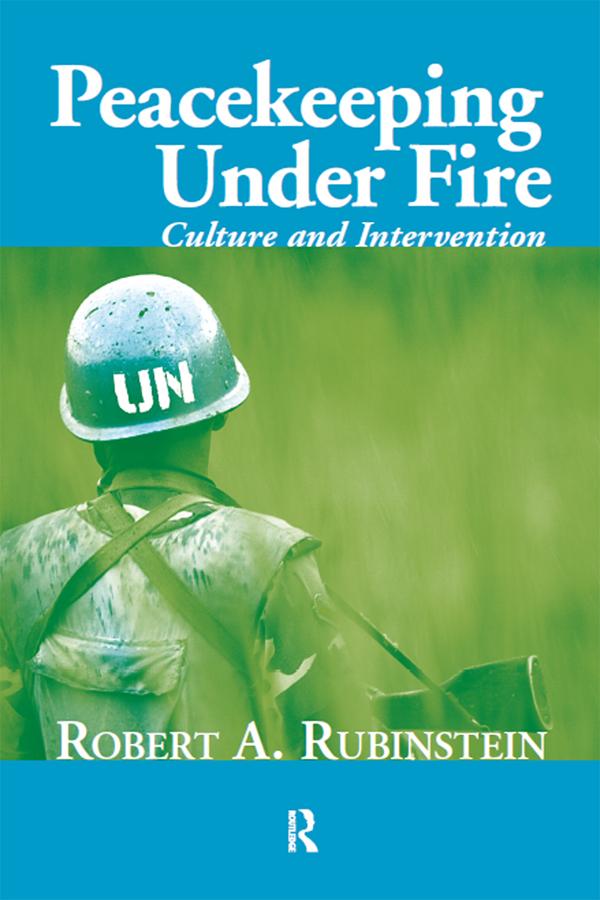
The international community increasingly responds to civil wars, humanitarian crises, and other intrastate conflicts through the instrument of UN peacekeeping. Nearly all of these interventions take place in non-Western areas and involve interactions among militaries and nongovernmental organizations from all around the globe. In this wide-ranging book, Rubinstein draws on decades of his own research on peacekeeping, and on other current and historical cases, to develop a broad understanding of the roles that culture plays in peacekeeping's success or failure. Peacekeeping under Fire shows that cultural considerations are key elements at all levels of peacekeeping operations. Culture influences what happens between peacekeepers and local populations, how military and nongovernmental organizations interact, and even how missions are planned and authorized. Peacekeeping under Fire analyzes how political symbolism and ritual are critical to peacekeeping and demonstrates how questions of power, identity, and political perception emerge from the cultural context of peacekeeping.
Betala smidigt med kort, Klarna, Apple Pay eller Google Pay. Är du inte nöjd har du alltid 14 dagars ångerrätt. Läs mer i våra villkor. Har du några frågor, mejla oss på hello@memmo.org.
Memmo gör det enklare att plugga – var du än är i världen. Hos oss samlar du kursböcker och smarta studieverktyg på ett och samma ställe: sammanfattningar, quiz, poddar och flashcards. Och så Ted, din studiekompis som svarar på allt du undrar. Över 50 000 studenter pluggar redan här – byggt för att du ska lära dig snabbare och stressa mindre.
Du kanske också gillar
Köp boken0