
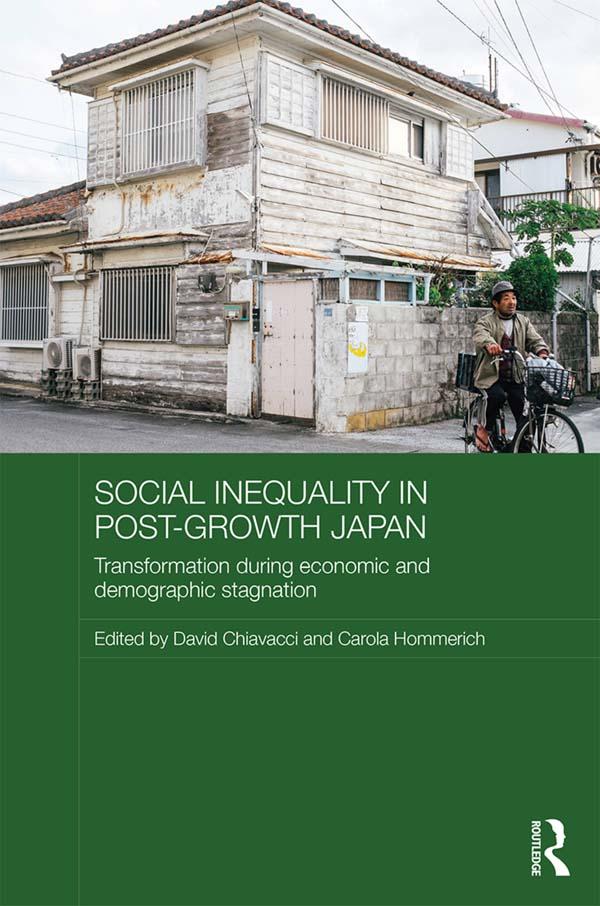
In recent decades Japan has changed from a strongly growing, economically successful nation regarded as prime example of social equality and inclusion, to a nation with a stagnating economy, a shrinking population and a very high proportion of elderly people. Within this, new forms of inequality are emerging and deepening, and a new model of Japan as 'gap society' (kakusa shakai) has become common-sense. These new forms of inequality are complex, are caused in different ways by a variety of factors, and require deep-seated reforms in order to remedy them. This book provides a comprehensive overview of inequality in contemporary Japan. It examines inequality in labour and employment, in welfare and family, in education and social mobility, in the urban-rural divide, and concerning immigration, ethnic minorities and gender. The book also considers the widespread anxiety effect of the fear of inequality; and discusses how far these developments in Japan represent a new form of social problem for the wider world.
Betala smidigt med kort, Klarna, Apple Pay eller Google Pay. Är du inte nöjd har du alltid 14 dagars ångerrätt. Läs mer i våra villkor. Har du några frågor, mejla oss på hello@memmo.org.
Memmo gör det enklare att plugga – var du än är i världen. Hos oss samlar du kursböcker och smarta studieverktyg på ett och samma ställe: sammanfattningar, quiz, poddar och flashcards. Och så Ted, din studiekompis som svarar på allt du undrar. Över 50 000 studenter pluggar redan här – byggt för att du ska lära dig snabbare och stressa mindre.