
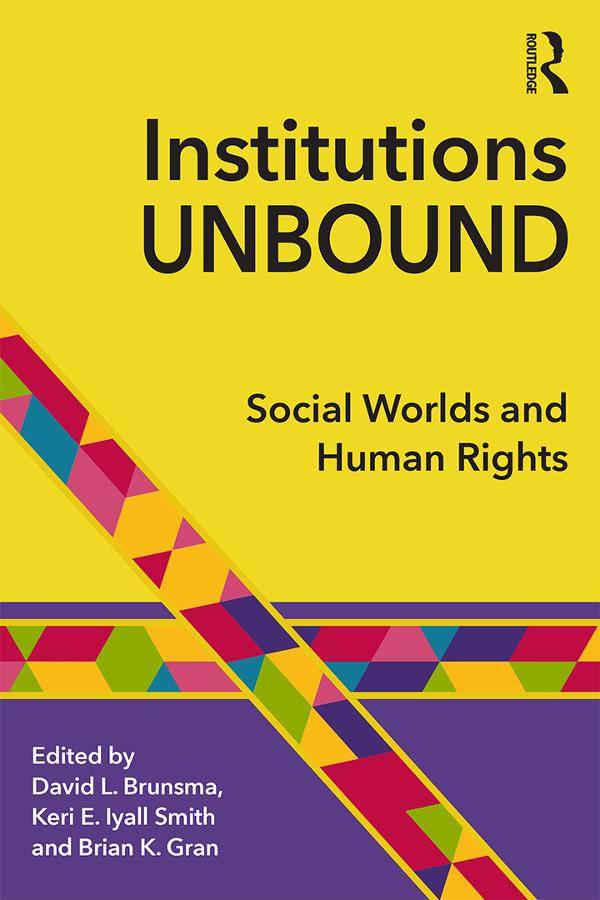
Institutions--like education, family, medicine, culture, and law--, are powerful social structures shaping how we live together. As members of society we daily express our adherence to norms and values of institutions as we consciously and unconsciously reject and challenge them. Our everyday experiences with institutions not only shape our connections with one another, they can reinforce our binding to the status quo as we struggle to produce social change. Institutions can help us do human rights. Institutions that bridge nation-states can offer resources, including norms, to advance human rights. These institutions can serve as touch stones to changing minds and confronting human rights violations. Institutions can also prevent us from doing human rights. We create institutions, but institutions can be difficult to change. Institutions can weaken, if not outright prevent, human rights establishment and implementation. To release human rights from their institutional bindings, sociologists must solve riddles of how institutions work and determine social life. This book is a step forward in identifying means by which we can loosen human rights from institutional constraints.
Betala smidigt med kort, Klarna, Apple Pay eller Google Pay. Är du inte nöjd har du alltid 14 dagars ångerrätt. Läs mer i våra villkor. Har du några frågor, mejla oss på hello@memmo.org.
Memmo gör det enklare att plugga – var du än är i världen. Hos oss samlar du kursböcker och smarta studieverktyg på ett och samma ställe: sammanfattningar, quiz, poddar och flashcards. Och så Ted, din studiekompis som svarar på allt du undrar. Över 50 000 studenter pluggar redan här – byggt för att du ska lära dig snabbare och stressa mindre.