
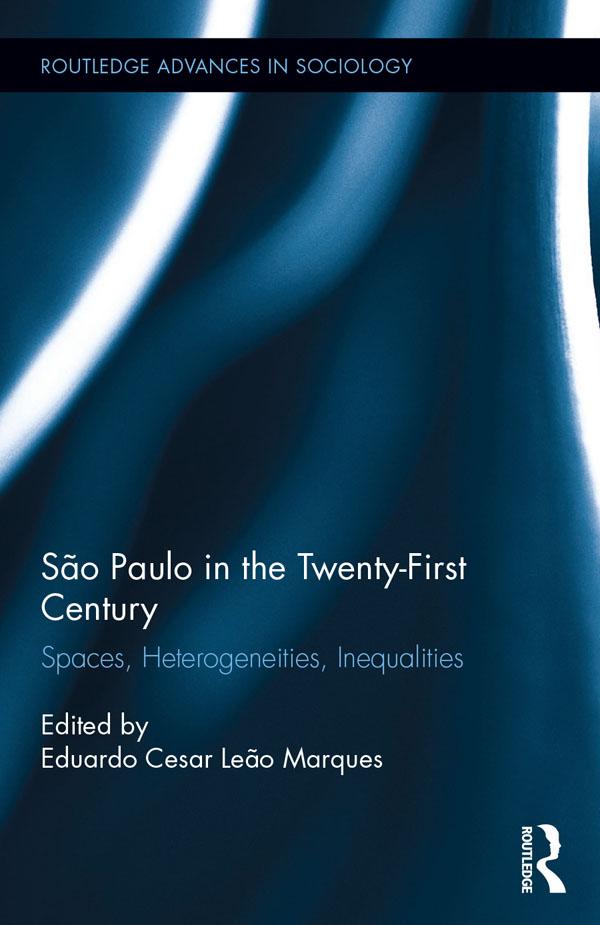
This book analyzes in detail the main social, economic and special transformation of the city of São Paulo. In the last 30 years, São Paulo has become a more heterogeneous and less unequal city. Contrary to some expectations, the recent economic transformations did not produce social polarization, and the localized processes of spaces production (and the plural is increasingly important) are more and more key to define their respective growth patterns, social conditions, forms of housing production, service availability and urban precariousness. In other dimensions, however, inequalities remain present and strong and certain disadvantaged areas have changed little and are still marked by strong social inequalities. The metropolis remains heavily segregated in terms of race and class, in a clear hierarchical structure.
The book shows that it is necessary to escape from dual and polarity interpretations. This did not lead to the complete disappearance of a crudely radial and concentric structure (not only due to geographic path dependence), but superposes other elements over it, leading to more complexes and continuous patterns. A general summary of these elements could perhaps be stated as pointing to greater social/spatial heterogeneity, accompanied by smaller, but reconfigured inequalities.
Betala smidigt med kort, Klarna, Apple Pay eller Google Pay. Är du inte nöjd har du alltid 14 dagars ångerrätt. Läs mer i våra villkor. Har du några frågor, mejla oss på hello@memmo.org.
Memmo gör det enklare att plugga – var du än är i världen. Hos oss samlar du kursböcker och smarta studieverktyg på ett och samma ställe: sammanfattningar, quiz, poddar och flashcards. Och så Ted, din studiekompis som svarar på allt du undrar. Över 75 000 studenter pluggar redan här – byggt för att du ska lära dig snabbare och stressa mindre.