
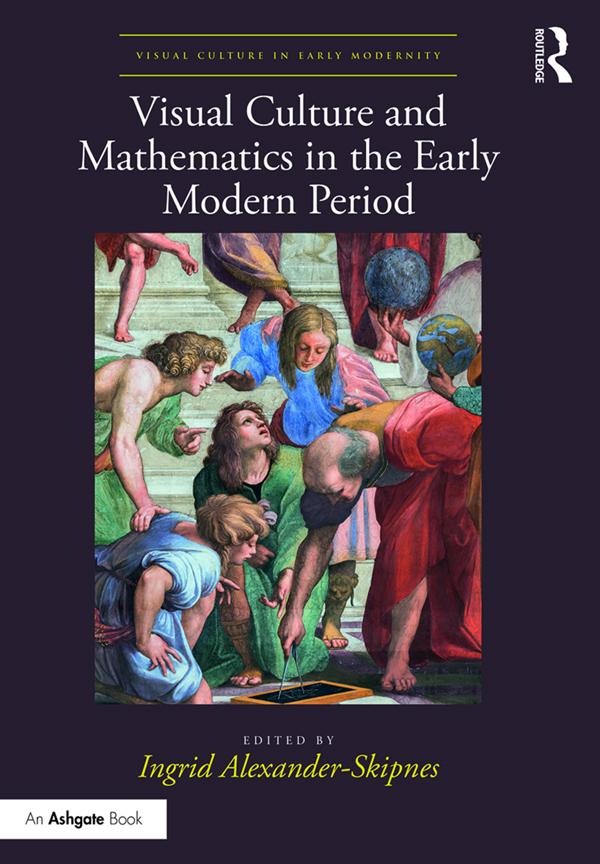
During the early modern period there was a natural correspondence between how artists might benefit from the knowledge of mathematics and how mathematicians might explore, through advances in the study of visual culture, new areas of enquiry that would uncover the mysteries of the visible world. This volume makes its contribution by offering new interdisciplinary approaches that not only investigate perspective but also examine how mathematics enriched aesthetic theory and the human mind. The contributors explore the portrayal of mathematical activity and mathematicians as well as their ideas and instruments, how artists displayed their mathematical skills and the choices visual artists made between geometry and arithmetic, as well as Euclid’s impact on drawing, artistic practice and theory. These chapters cover a broad geographical area that includes Italy, Switzerland, Germany, the Netherlands, France and England. The artists, philosophers and mathematicians whose work is discussed include Leon Battista Alberti, Nicholas Cusanus, Marsilio Ficino, Francesco di Giorgio, Leonardo da Vinci and Andrea del Verrocchio, as well as Michelangelo, Galileo, Piero della Francesca, Girard Desargues, William Hogarth, Albrecht Dürer, Luca Pacioli and Raphael.
Betala smidigt med kort, Klarna, Apple Pay eller Google Pay. Är du inte nöjd har du alltid 14 dagars ångerrätt. Läs mer i våra villkor. Har du några frågor, mejla oss på hello@memmo.org.
Memmo gör det enklare att plugga – var du än är i världen. Hos oss samlar du kursböcker och smarta studieverktyg på ett och samma ställe: sammanfattningar, quiz, poddar och flashcards. Och så Ted, din studiekompis som svarar på allt du undrar. Över 50 000 studenter pluggar redan här – byggt för att du ska lära dig snabbare och stressa mindre.