
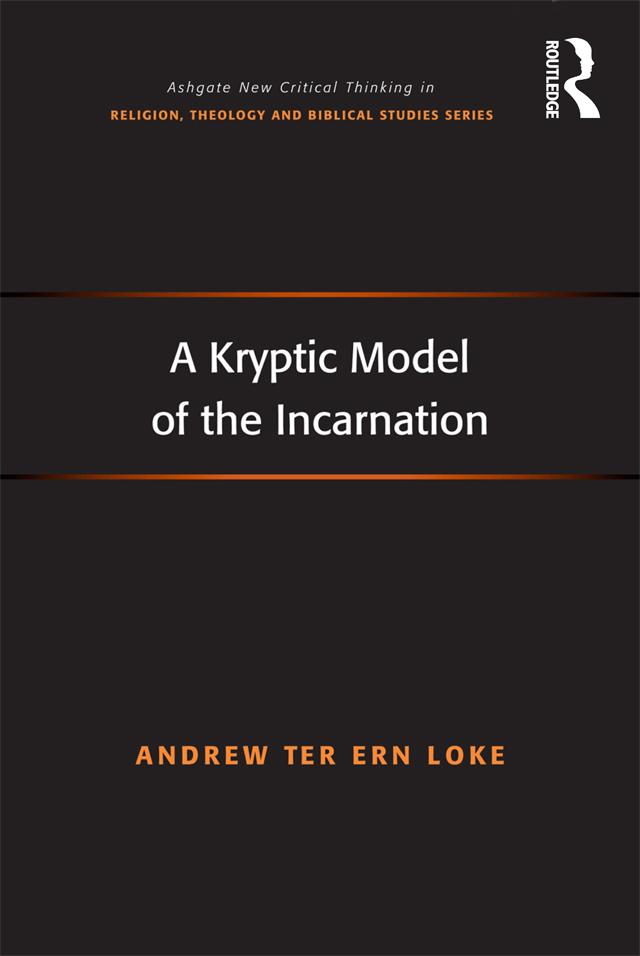
The Incarnation, traditionally understood as the metaphysical union between true divinity and true humanity in the one person of Jesus Christ, is one of the central doctrines for Christians over the centuries. Nevertheless, many scholars have objected that the Scriptural account of the Incarnation is incoherent. Being divine seems to entail being omniscient, omnipotent and omnipresent, but the New Testament portrays Jesus as having human properties such as being apparently limited in knowledge, power, and presence. It seems logically impossible that any single individual could possess such mutually exclusive sets of properties, and this leads to scepticism concerning the occurrence of the Incarnation in history. A Kryptic Model of the Incarnation aims to provide a critical reflection of various attempts to answer these challenges and to offer a compelling response integrating aspects from analytic philosophy of religion, systematic theology, and historical-critical studies. Loke develops a new Kryptic model of the Incarnation, drawing from the Greek word Krypsis meaning ’hiding’, and proposing that in a certain sense Christ’s supernatural properties were concealed during the Incarnation.
Betala smidigt med kort, Klarna, Apple Pay eller Google Pay. Är du inte nöjd har du alltid 14 dagars ångerrätt. Läs mer i våra villkor. Har du några frågor, mejla oss på hello@memmo.org.
Memmo gör det enklare att plugga – var du än är i världen. Hos oss samlar du kursböcker och smarta studieverktyg på ett och samma ställe: sammanfattningar, quiz, poddar och flashcards. Och så Ted, din studiekompis som svarar på allt du undrar. Över 50 000 studenter pluggar redan här – byggt för att du ska lära dig snabbare och stressa mindre.
Du kanske också gillar
Köp boken0