
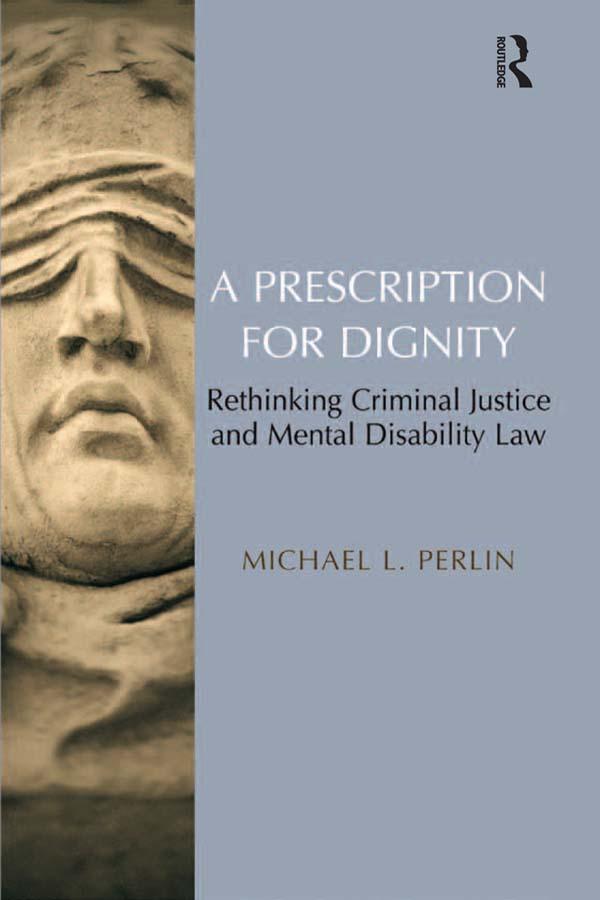
Examining the treatment of persons with mental disabilities in the criminal justice system, this book offers new perspectives that are crucial to an understanding of the ways in which society projects onto criminal defendants prejudices and attitudes about responsibility, free will, autonomy, choice, public safety, and the meaning and purpose of punishment, all with a focus on ways to enhance dignity in the criminal trial process. It is a detailed exploration of issues of adequacy of counsel; the impact of international human rights law, following the ratification of the United Nations Convention on the Rights of Persons with Disabilities (CRPD); the role of mental health courts; and the influence of therapeutic jurisprudence, procedural justice, and restorative justice on the legal process. It considers all of these perspectives in the context of criminal justice system issues such as competency findings, the insanity defense, and sentencing. Demonstrating how the question of treatment of persons with mental disabilities in the criminal justice system is not only a vital one for both scholars and practitioners, but also a central facet of international human rights law, this book suggests policy development, further scholarly inquiries, and newly invigorated thinking and action to place dignity at the core of the criminal justice system.
Betala smidigt med kort, Klarna, Apple Pay eller Google Pay. Är du inte nöjd har du alltid 14 dagars ångerrätt. Läs mer i våra villkor. Har du några frågor, mejla oss på hello@memmo.org.
Memmo gör det enklare att plugga – var du än är i världen. Hos oss samlar du kursböcker och smarta studieverktyg på ett och samma ställe: sammanfattningar, quiz, poddar och flashcards. Och så Ted, din studiekompis som svarar på allt du undrar. Över 50 000 studenter pluggar redan här – byggt för att du ska lära dig snabbare och stressa mindre.
Du kanske också gillar
Köp boken0