
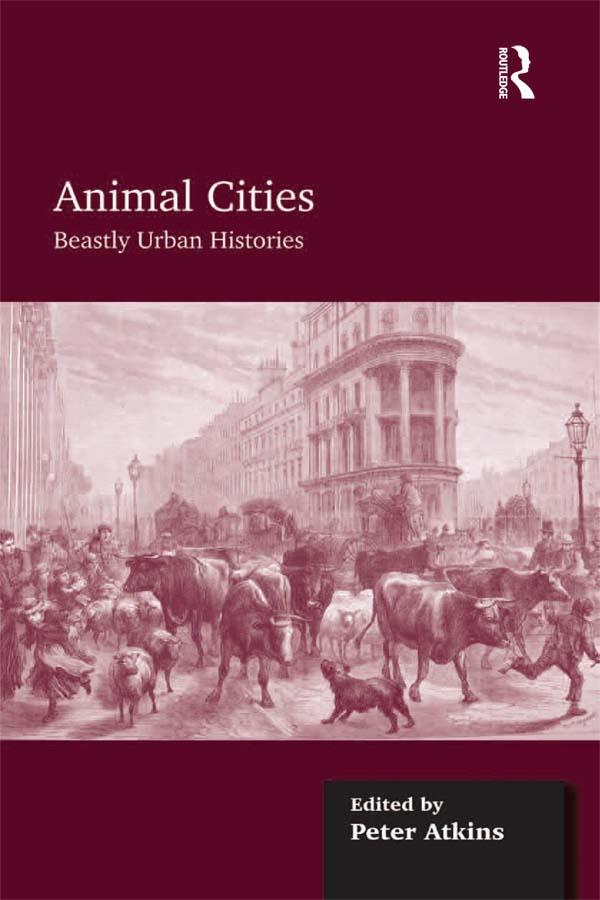
Animal Cities builds upon a recent surge of interest about animals in the urban context. Considering animals in urban settings is now a firmly established area of study and this book presents a number of valuable case studies that illustrate some of the perspectives that may be adopted. Having an ’urban history’ flavour, the book follows a fourfold agenda. First, the opening chapters look at working and productive animals that lived and died in nineteenth-century cities such as London, Edinburgh and Paris. The argument here is that their presence yields insights into evolving understandings of the category ’urban’ and what made a good city. Second, there is a consideration of nineteenth-century animal spectacles, which influenced contemporary interpretations of the urban experience. Third, the theme of contested animal spaces in the city is explored further with regard to backyard chickens in suburban Australia. Finally, there is discussion of the problem of the public companion animal and its role in changing attitudes to public space, illustrated with a chapter on dog-walking in Victorian and Edwardian London. Animal Cities makes a significant contribution to animal studies and is of interest to historical geographers, urban, cultural, social and economic historians and historians of policy and planning.
Betala smidigt med kort, Klarna, Apple Pay eller Google Pay. Är du inte nöjd har du alltid 14 dagars ångerrätt. Läs mer i våra villkor. Har du några frågor, mejla oss på hello@memmo.org.
Memmo gör det enklare att plugga – var du än är i världen. Hos oss samlar du kursböcker och smarta studieverktyg på ett och samma ställe: sammanfattningar, quiz, poddar och flashcards. Och så Ted, din studiekompis som svarar på allt du undrar. Över 50 000 studenter pluggar redan här – byggt för att du ska lära dig snabbare och stressa mindre.
Du kanske också gillar
Köp boken0