
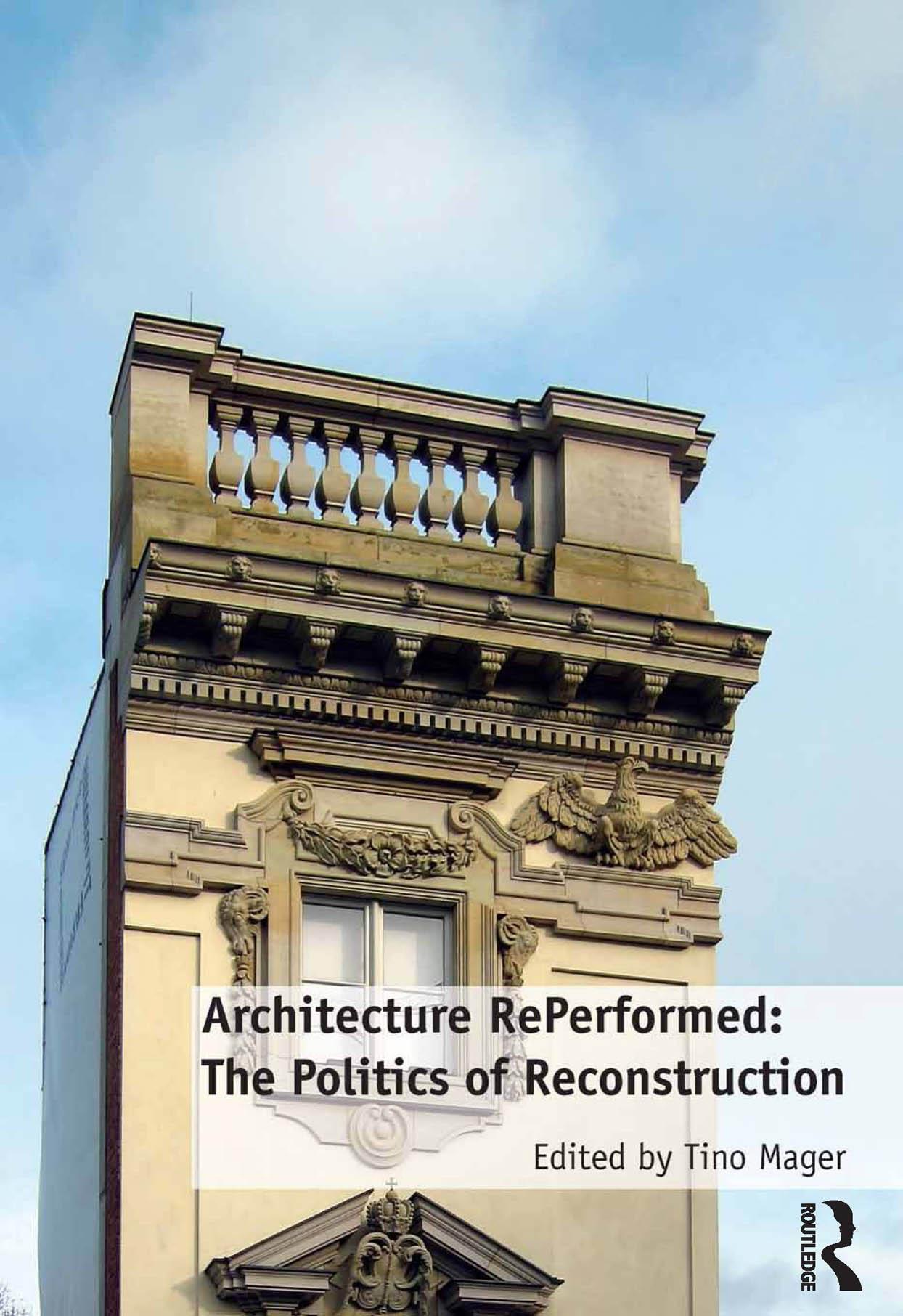
First emerging at the beginning of the twentieth century, architectural reconstruction has increasingly become an instrument to visually revive a long bygone past. This book deals with the phenomenon of meticulous reconstruction in architecture. It argues that the politics of reconstruction go far beyond aesthetic considerations. Taking architecture as a major source of history and regional identity, the impact of large-scale reconstruction is deeply intertwined with political and social factors. Furthermore, memories and associations correlated with lost buildings of a bygone era are heavily influenced by their re-appearance, something which often contradicts historical events. Reconstruction has become an established way of building and dealing with the past, yet so far, there is no comprehensive scientific study on it. By bringing together eight case studies from Eastern Europe, France, Spain, China, Japan, Israel and Brazil, it provides valuable insights into this topic. The chapters analyse the political background of the reconstructions and identify the protagonists. In doing so, this volume adds to our understanding of the impact of reconstruction to memory and oblivion, as well as the critical power of reconstruction regarding contemporary architecture and urbanism.
Betala smidigt med kort, Klarna, Apple Pay eller Google Pay. Är du inte nöjd har du alltid 14 dagars ångerrätt. Läs mer i våra villkor. Har du några frågor, mejla oss på hello@memmo.org.
Memmo gör det enklare att plugga – var du än är i världen. Hos oss samlar du kursböcker och smarta studieverktyg på ett och samma ställe: sammanfattningar, quiz, poddar och flashcards. Och så Ted, din studiekompis som svarar på allt du undrar. Över 75 000 studenter pluggar redan här – byggt för att du ska lära dig snabbare och stressa mindre.
Du kanske också gillar
Köp boken0