
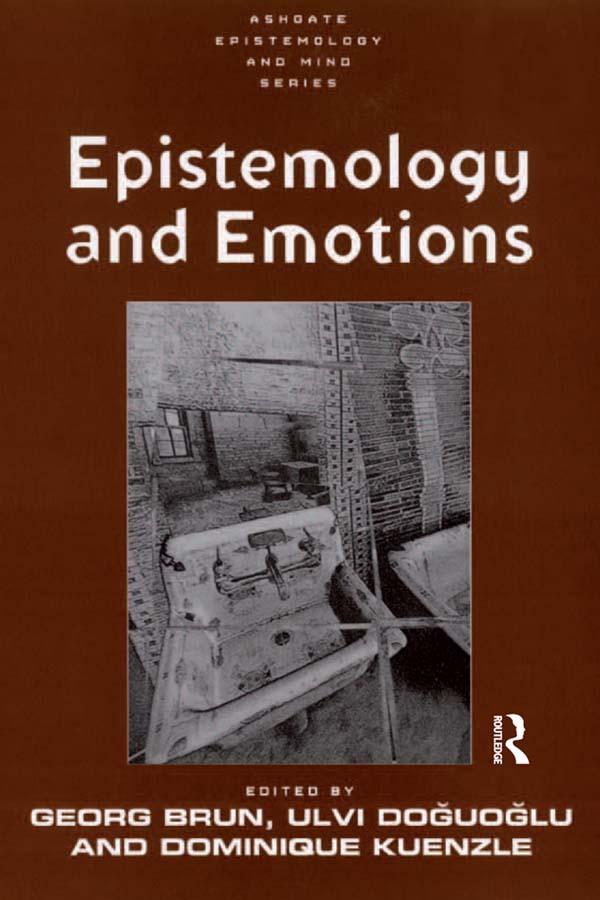
Undoubtedly, emotions sometimes thwart our epistemic endeavours. But do they also contribute to epistemic success? The thesis that emotions 'skew the epistemic landscape', as Peter Goldie puts it in this volume, has long been discussed in epistemology. Recently, however, philosophers have called for a systematic reassessment of the epistemic relevance of emotions. The resulting debate at the interface between epistemology, theory of emotions and cognitive science examines emotions in a wide range of functions. These include motivating inquiry, establishing relevance, as well as providing access to facts, beliefs and non-propositional aspects of knowledge. This volume is the first collection focusing on the claim that we cannot but account for emotions if we are to understand the processes and evaluations related to empirical knowledge. All essays are specifically written for this collection by leading researchers in this relatively new and developing field, bringing together work from backgrounds such as pragmatism and scepticism, cognitive theories of emotions and cognitive science, Cartesian epistemology and virtue epistemology.
Betala smidigt med kort, Klarna, Apple Pay eller Google Pay. Är du inte nöjd har du alltid 14 dagars ångerrätt. Läs mer i våra villkor. Har du några frågor, mejla oss på hello@memmo.org.
Memmo gör det enklare att plugga – var du än är i världen. Hos oss samlar du kursböcker och smarta studieverktyg på ett och samma ställe: sammanfattningar, quiz, poddar och flashcards. Och så Ted, din studiekompis som svarar på allt du undrar. Över 50 000 studenter pluggar redan här – byggt för att du ska lära dig snabbare och stressa mindre.
Du kanske också gillar
Köp boken0