
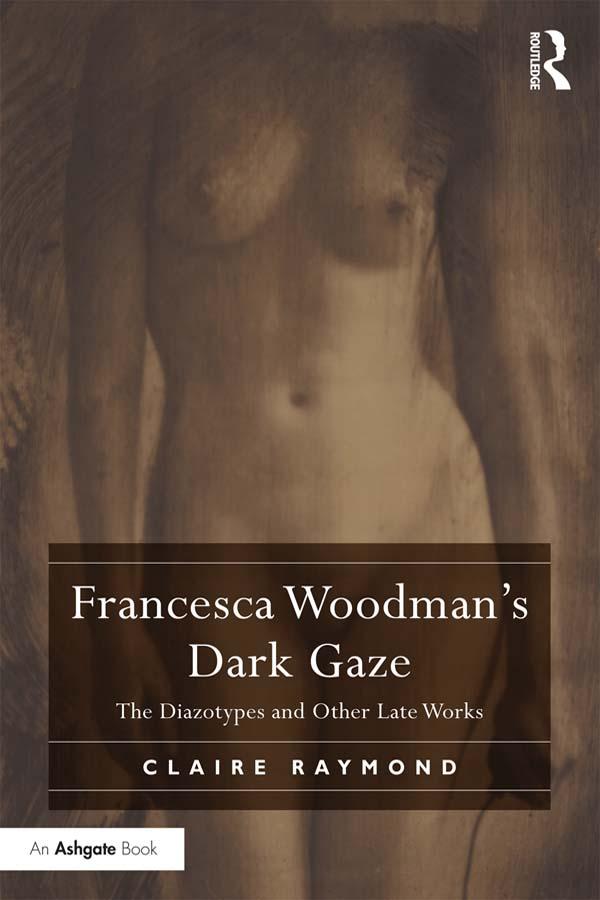
Focusing on the later work of the American photographer Francesca Woodman (1958-1981), Claire Raymond takes up the question of the disintegrative condition of the art she produced in the last year of her life. Departing from the techniques of her earlier compositions, Woodman worked in the diazotype process for many of these late pieces, most importantly the monumental Blueprint for a Temple. Raymond shows that through her use of diazotype, a medium that breaks down when exposed to light, Woodman created art that is both supremely evocative aesthetically and inherently unstable physically. Woodman, Raymond contends, was imaginatively responding to the end of the durable image, a historical reality acknowledged in the way her work plays the ephemeral and evanescent against the monumental and enduring. Raymond focuses on the theoretical and the curatorial issues surrounding Woodman's diazotypes, a thematic and practical distress that haunts much of her later art, especially the artist's book and photo series Some Disordered Interior Geometries and Portrait of a Reputation. Rather than conceiving of Woodman herself as fragile, an artist chronicling and seeming to yearn for her own disappearance, Raymond juxtaposes Woodman's career-spanning documentation of her own image against other post-war witnesses of trauma - an artist standing in the museum ruins where she emerges most distinctly as a figure of postmodernity.
Betala smidigt med kort, Klarna, Apple Pay eller Google Pay. Är du inte nöjd har du alltid 14 dagars ångerrätt. Läs mer i våra villkor. Har du några frågor, mejla oss på hello@memmo.org.
Memmo gör det enklare att plugga – var du än är i världen. Hos oss samlar du kursböcker och smarta studieverktyg på ett och samma ställe: sammanfattningar, quiz, poddar och flashcards. Och så Ted, din studiekompis som svarar på allt du undrar. Över 50 000 studenter pluggar redan här – byggt för att du ska lära dig snabbare och stressa mindre.
Du kanske också gillar
Köp boken0