
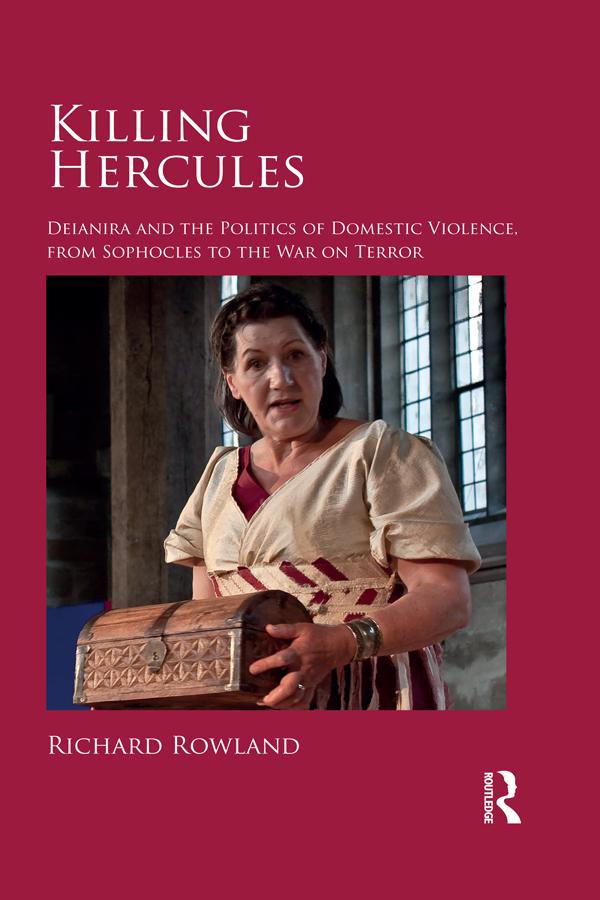
This book offers an entirely new reception history of the myth of Hercules and his wife/killer Deianira. The book poses, and attempts to answer, two important and related questions. First, why have artists across two millennia felt compelled to revisit this particular myth to express anxieties about violence at both a global and domestic level? Secondly, from the moment that Sophocles disrupted a myth about the definitive exemplar of masculinity and martial prowess and turned it into a story about domestic abuse, through to a 2014 production of Handel’s Hercules that was set in the context of the ‘war on terror’, the reception history of this myth has been one of discontinuity and conflict; how and why does each culture reinvent this narrative to address its own concerns and discontents, and how does each generation speak to, qualify or annihilate the certainties of its predecessors in order to understand, contain or exonerate the aggression with which their governors – of state and of the household – so often enforce their authority, and the violence to which their nations, and their homes, are perennially vulnerable?
Betala smidigt med kort, Klarna, Apple Pay eller Google Pay. Är du inte nöjd har du alltid 14 dagars ångerrätt. Läs mer i våra villkor. Har du några frågor, mejla oss på hello@memmo.org.
Memmo gör det enklare att plugga – var du än är i världen. Hos oss samlar du kursböcker och smarta studieverktyg på ett och samma ställe: sammanfattningar, quiz, poddar och flashcards. Och så Ted, din studiekompis som svarar på allt du undrar. Över 50 000 studenter pluggar redan här – byggt för att du ska lära dig snabbare och stressa mindre.