
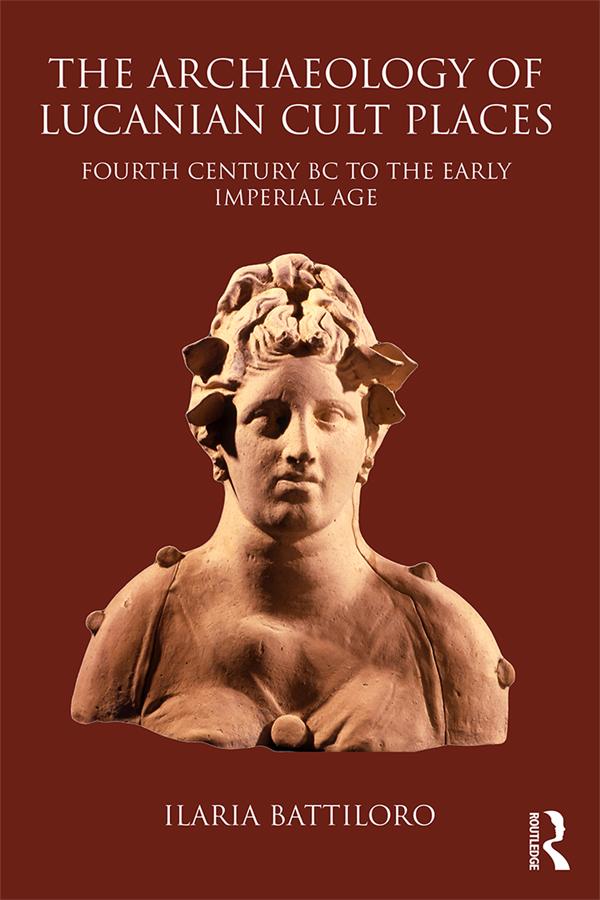
With the emergence and structuring of the Lucanian ethnos during the fourth century BC, a network of cult places, set apart from habitation spaces, was created at the crossroads of the most important communication routes of ancient Lucania. These sanctuaries became centers of social and political aggregation of the local communities: a space in which the community united for all the social manifestations that, in urban societies, were usually performed within the city space.
With a detailed analysis of the archaeological record, this study traces the historical and archaeological narrative of Lucanian cult places from their creation to the Late Republican Age, which saw the incorporation of southern Italy into the Roman state. By placing the sanctuaries within their territorial, political, social, and cultural context, Battiloro offers insight into the diachronic development of sacred architecture and ritual customs in ancient Lucania.
The author highlights the role of material evidence in constructing the significance of sanctuaries in the historical context in which they were used, and crucial new evidence from the most recent archaeological investigations is explored in order to define dynamics of contact and interaction between Lucanians and Romans on the eve of the Roman conquest.
Betala smidigt med kort, Klarna, Apple Pay eller Google Pay. Är du inte nöjd har du alltid 14 dagars ångerrätt. Läs mer i våra villkor. Har du några frågor, mejla oss på hello@memmo.org.
Memmo gör det enklare att plugga – var du än är i världen. Hos oss samlar du kursböcker och smarta studieverktyg på ett och samma ställe: sammanfattningar, quiz, poddar och flashcards. Och så Ted, din studiekompis som svarar på allt du undrar. Över 50 000 studenter pluggar redan här – byggt för att du ska lära dig snabbare och stressa mindre.