
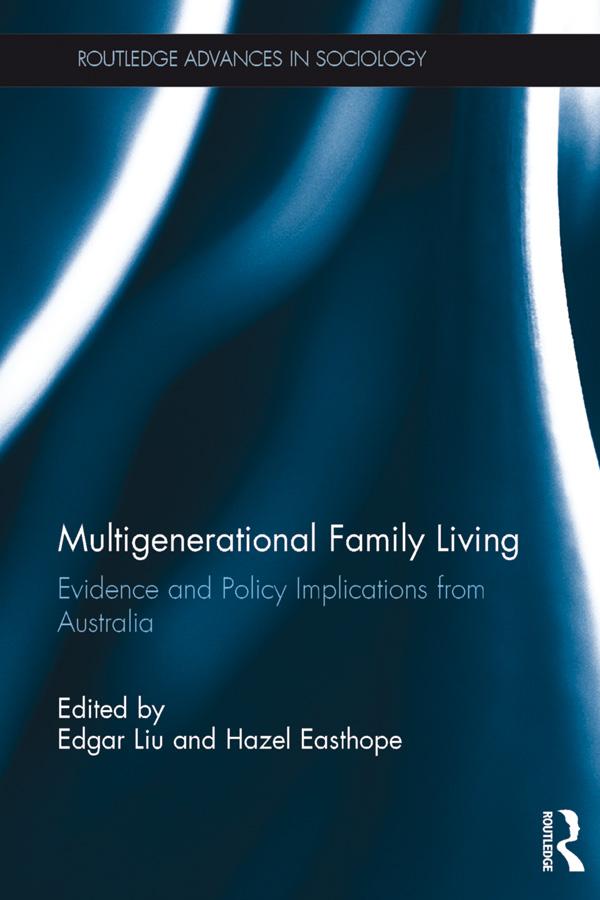
Multigenerational living – where more than one generation of related adults cohabit in the same dwelling – is recognized as a common arrangement amongst many Asian, Middle Eastern and Southern European cultures, but this arrangement is becoming increasingly familiar in many Western societies. Much Western research on multigenerational households has highlighted young adults' delayed first home leaving, the result of difficult economic prospects and the prolonged adolescence of generation Y. This book shows that the causes and results of this phenomenon are more complex.
The book sheds fresh light on a range of structural and social drivers that have led multigenerational families to cohabit and the ways in which families negotiate the dynamic interactions amongst these drivers in their everyday lives. It critically examines factors such as demographics, the environment, culture and family considerations of identity, health, care and well-being, revealing how such factors reflect (and are reflected by) a retracting welfare state and changing understandings of families in an increasingly mobile world.
Based on a series of qualitative and quantitative research projects conducted in Australia, the book provides an interdisciplinary examination of intergenerational cohabitation that explores a variety of concerns and experiences. It will appeal to scholars across the social sciences with interests in housing, demographics and the sociology of the family.
Betala smidigt med kort, Klarna, Apple Pay eller Google Pay. Är du inte nöjd har du alltid 14 dagars ångerrätt. Läs mer i våra villkor. Har du några frågor, mejla oss på hello@memmo.org.
Memmo gör det enklare att plugga – var du än är i världen. Hos oss samlar du kursböcker och smarta studieverktyg på ett och samma ställe: sammanfattningar, quiz, poddar och flashcards. Och så Ted, din studiekompis som svarar på allt du undrar. Över 50 000 studenter pluggar redan här – byggt för att du ska lära dig snabbare och stressa mindre.