
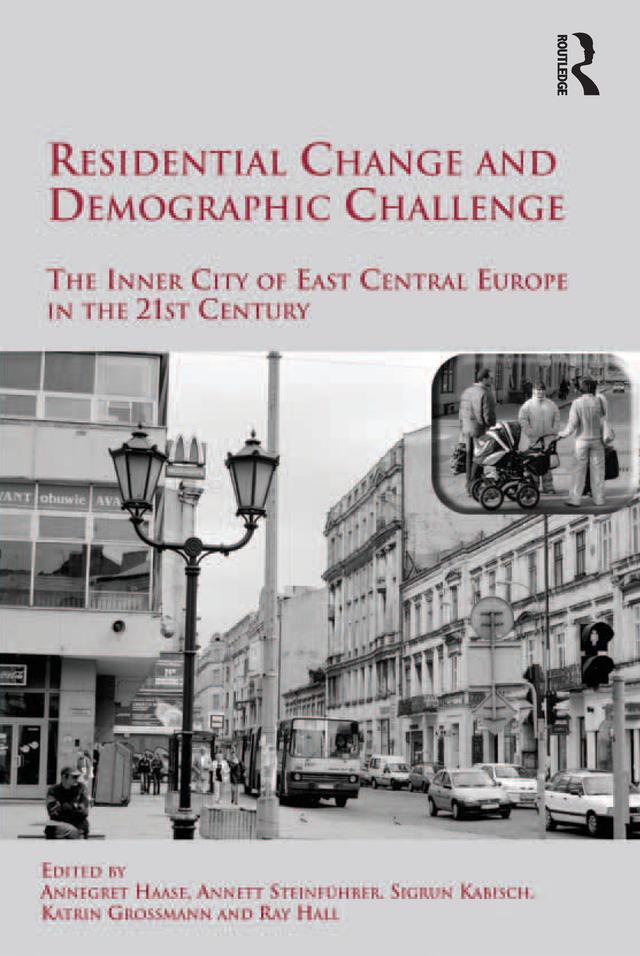
Going beyond the assumption that East Central European cities are still 'in transition' this book draws on the postsocialism paradigm to ask new questions about the impact of demographic change on residential developments in this region. Focussing on four second-order cities in this region, it examines Gdansk and Lódz in Poland and Brno and Ostrava in the Czech Republic as examples and deals with the nexus between urban development and demographic change for the context of East Central European cities. It provides a framework for linking urban and demographic research. It discusses how residential areas and urban developments cope with changes in population development, household types and different forms of in- and out-migration and goes on to explore parallels and differences in comparison with broader European patterns. This book will be useful to academics of urban planning and development especially in transition areas, Central and Eastern European studies, demographics and population studies, and sociology/social exclusion.
Betala smidigt med kort, Klarna, Apple Pay eller Google Pay. Är du inte nöjd har du alltid 14 dagars ångerrätt. Läs mer i våra villkor. Har du några frågor, mejla oss på hello@memmo.org.
Memmo gör det enklare att plugga – var du än är i världen. Hos oss samlar du kursböcker och smarta studieverktyg på ett och samma ställe: sammanfattningar, quiz, poddar och flashcards. Och så Ted, din studiekompis som svarar på allt du undrar. Över 75 000 studenter pluggar redan här – byggt för att du ska lära dig snabbare och stressa mindre.
Du kanske också gillar
Köp boken0