
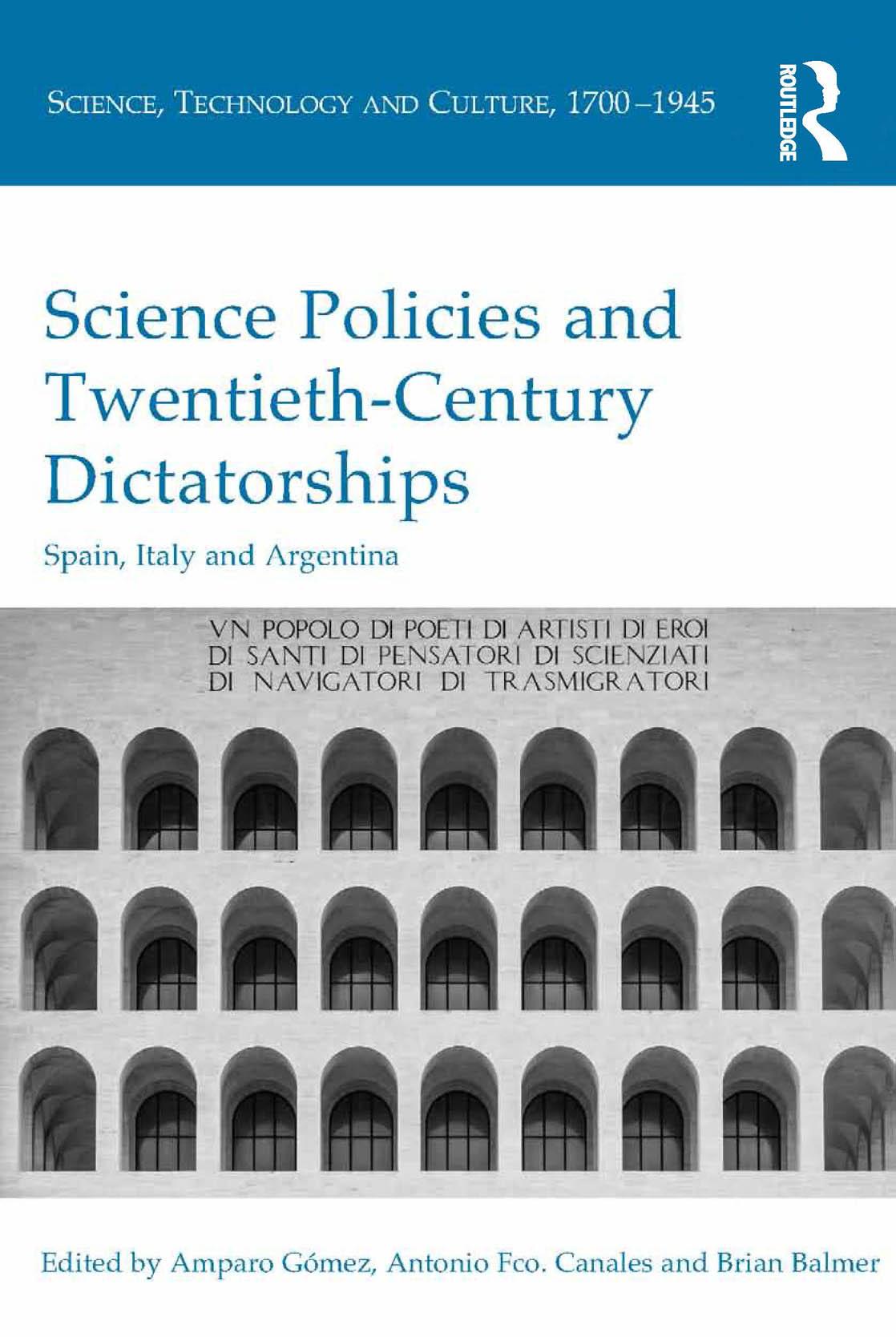
Making a fresh contribution to the political history of science, this book explores the connections between the science policies of three countries that each experienced considerable political upheaval in the twentieth century: Spain, Italy and Argentina. By focussing on these three countries, the contributors are able to present case studies that highlight the characteristics and specificities of the democratic and dictatorial political processes involved in the production of science and technology. The focus on dictatorship presents the opportunity to expand our knowledge -beyond the more extensive literature about science in Nazi Germany and Stalinist USSR -about the level of political involvement of scientists in non-democratic contexts and to what extent they act as politicians in different contexts. Key topics covered include the new forms of organization and institutionalization of science in the twentieth century; the involvement of scientific communities in the governance of science and its institutions; the role of ideology in scientific development; the scientific practices adopted by scientific communities in different contexts; and the characteristics of science and technology produced in these contexts.
Betala smidigt med kort, Klarna, Apple Pay eller Google Pay. Är du inte nöjd har du alltid 14 dagars ångerrätt. Läs mer i våra villkor. Har du några frågor, mejla oss på hello@memmo.org.
Memmo gör det enklare att plugga – var du än är i världen. Hos oss samlar du kursböcker och smarta studieverktyg på ett och samma ställe: sammanfattningar, quiz, poddar och flashcards. Och så Ted, din studiekompis som svarar på allt du undrar. Över 50 000 studenter pluggar redan här – byggt för att du ska lära dig snabbare och stressa mindre.
Du kanske också gillar
Köp boken0