
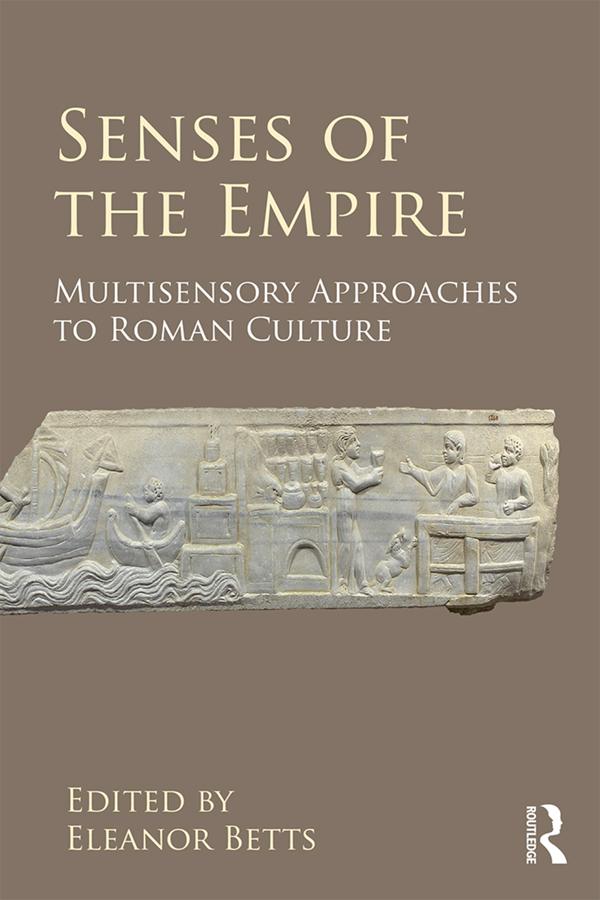
The Roman empire afforded a kaleidoscope of sensations. Through a series of multisensory case studies centred on people, places, buildings and artefacts, and on specific aspects of human behaviour, this volume develops ground-breaking methods and approaches for sensory studies in Roman archaeology and ancient history. Authors explore questions such as: what it felt like, and symbolised, to be showered with saffron at the amphitheatre; why the shape of a dancer’s body made him immediately recognisable as a social outcast; how the dramatic gestures, loud noises and unforgettable smells of a funeral would have different meanings for members of the family and for bystanders; and why feeling the weight of a signet ring on his finger contributed to a man’s sense of identity. A multisensory approach is taken throughout, with each chapter exploring at least two of the senses of sight, hearing, smell, taste and touch. The contributors’ individual approaches vary, reflecting the possibilities and the wide application of sensory studies to the ancient world. Underlying all chapters is a conviction that taking a multisensory approach enriches our understanding of the Roman empire, but also an awareness of the methodological problems encountered when reconstructing past experiences.
Betala smidigt med kort, Klarna, Apple Pay eller Google Pay. Är du inte nöjd har du alltid 14 dagars ångerrätt. Läs mer i våra villkor. Har du några frågor, mejla oss på hello@memmo.org.
Memmo gör det enklare att plugga – var du än är i världen. Hos oss samlar du kursböcker och smarta studieverktyg på ett och samma ställe: sammanfattningar, quiz, poddar och flashcards. Och så Ted, din studiekompis som svarar på allt du undrar. Över 50 000 studenter pluggar redan här – byggt för att du ska lära dig snabbare och stressa mindre.