
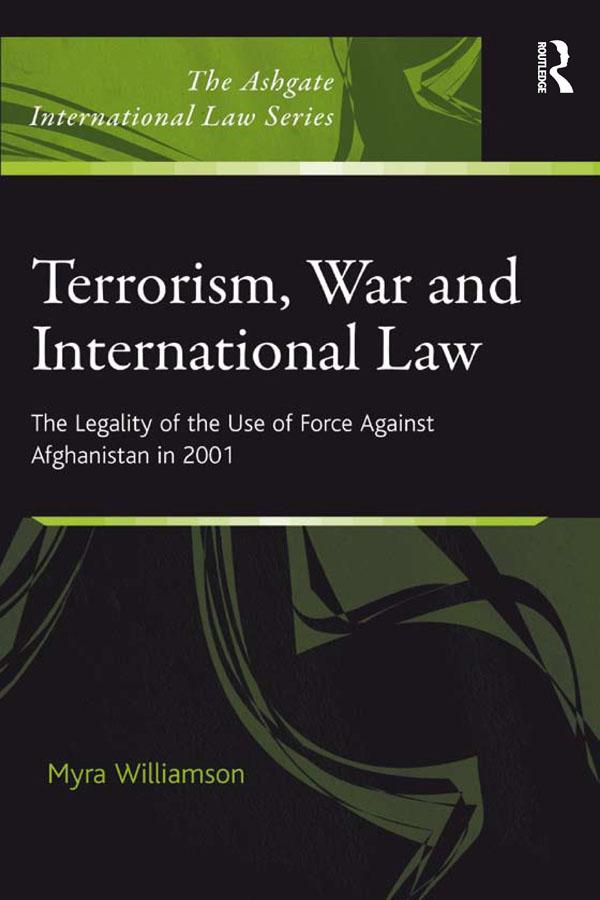
This book analyzes the legality of the use of force by the US, the UK and their NATO allies against Afghanistan in 2001. The work challenges the main ground for resorting to force, namely, self-defence under Article 51 of the United Nations' Charter, by examining each element of Article 51 that ought to have been satisfied in order to legitimise the use of force. It also examines the wider context, including comparable Security Council resolutions in historic situations as well as modern instances where force has been used, such as against Iraq in 2003 and against Lebanon in 2006. As well as making the case against the legality of the use of force, the book addresses wider questions such as the meaning of 'terrorism' in international law, the changing nature of conflict in the twentieth and twenty-first centuries including the impact of non-state actors and an overview of terrorism trends as well as the evolution of limitations on the resort to force from the League of Nations through to 2001. The book concludes with some insight into the possible future implications for the use of force by states, particularly when force is purportedly justified on the grounds of self-defence.
Betala smidigt med kort, Klarna, Apple Pay eller Google Pay. Är du inte nöjd har du alltid 14 dagars ångerrätt. Läs mer i våra villkor. Har du några frågor, mejla oss på hello@memmo.org.
Memmo gör det enklare att plugga – var du än är i världen. Hos oss samlar du kursböcker och smarta studieverktyg på ett och samma ställe: sammanfattningar, quiz, poddar och flashcards. Och så Ted, din studiekompis som svarar på allt du undrar. Över 50 000 studenter pluggar redan här – byggt för att du ska lära dig snabbare och stressa mindre.
Du kanske också gillar
Köp boken0