
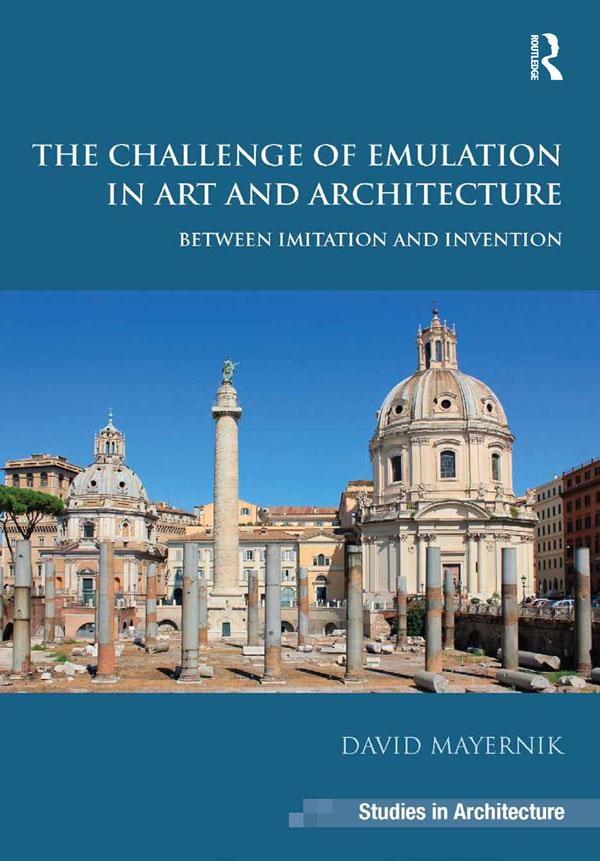
Emulation is a challenging middle ground between imitation and invention. The idea of rivaling by means of imitation, as old as the Aenead and as modern as Michelangelo, fit neither the pessimistic deference of the neoclassicists nor the revolutionary spirit of the Romantics. Emulation thus disappeared along with the Renaissance humanist tradition, but it is slowly being recovered in the scholarship of Roman art. It remains to recover emulation for the Renaissance itself, and to revivify it for modern practice. Mayernik argues that it was the absence of a coherent understanding of emulation that fostered the fissuring of artistic production in the later eighteenth century into those devoted to copying the past and those interested in continual novelty, a situation solidified over the course of the nineteenth century and mostly taken for granted today. This book is a unique contribution to our understanding of the historical phenomenon of emulation, and perhaps more importantly a timely argument for its value to contemporary practice.
Betala smidigt med kort, Klarna, Apple Pay eller Google Pay. Är du inte nöjd har du alltid 14 dagars ångerrätt. Läs mer i våra villkor. Har du några frågor, mejla oss på hello@memmo.org.
Memmo gör det enklare att plugga – var du än är i världen. Hos oss samlar du kursböcker och smarta studieverktyg på ett och samma ställe: sammanfattningar, quiz, poddar och flashcards. Och så Ted, din studiekompis som svarar på allt du undrar. Över 75 000 studenter pluggar redan här – byggt för att du ska lära dig snabbare och stressa mindre.
Du kanske också gillar
Köp boken0