
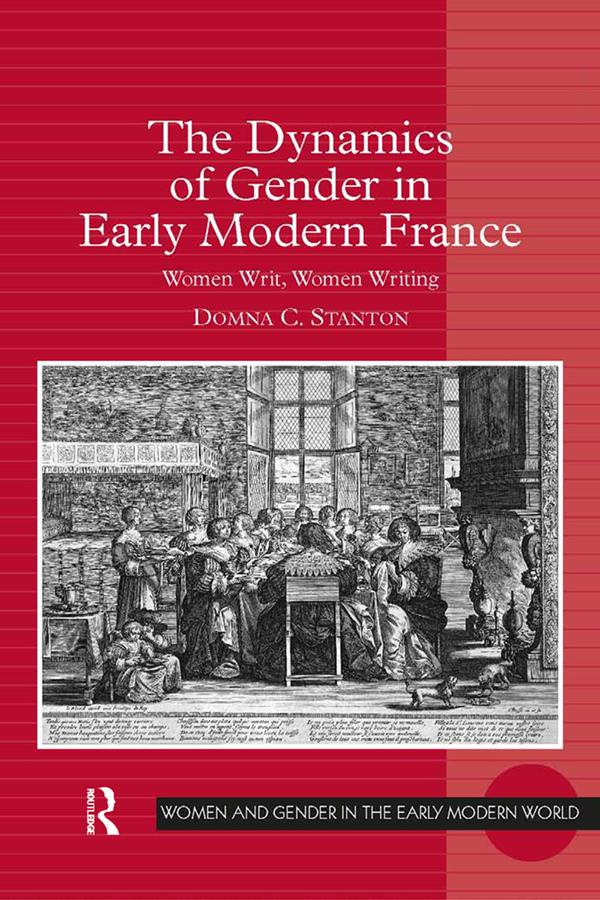
In its six case studies, The Dynamics of Gender in Early Modern France works out a model for (early modern) gender, which is articulated in the introduction. The book comprises essays on the construction of women: three in texts by male and three by female writers, including Racine, Fénelon, Poulain de la Barre, in the first part; La Guette, La Fayette and Sévigné, in the second. These studies thus also take up different genres: satire, tragedy and treatise; memoir, novella and letter-writing. Since gender is a relational construct, each chapter considers as well specific textual and contextual representations of men. In every instance, Stanton looks for signs of conformity to-and deviations from-normative gender scripts. The Dynamics of Gender adds a new dimension to early modern French literary and cultural studies: it incorporates a dynamic (shifting) theory of gender, and it engages both contemporary critical theory and literary historical readings of primary texts and established concepts in the field. This book emphasizes the central importance of historical context and close reading from a feminist perspective, which it also interrogates as a practice. The Afterword examines some of the meanings of reading-as-a-feminist.
Betala smidigt med kort, Klarna, Apple Pay eller Google Pay. Är du inte nöjd har du alltid 14 dagars ångerrätt. Läs mer i våra villkor. Har du några frågor, mejla oss på hello@memmo.org.
Memmo gör det enklare att plugga – var du än är i världen. Hos oss samlar du kursböcker och smarta studieverktyg på ett och samma ställe: sammanfattningar, quiz, poddar och flashcards. Och så Ted, din studiekompis som svarar på allt du undrar. Över 50 000 studenter pluggar redan här – byggt för att du ska lära dig snabbare och stressa mindre.
Du kanske också gillar
Köp boken0