
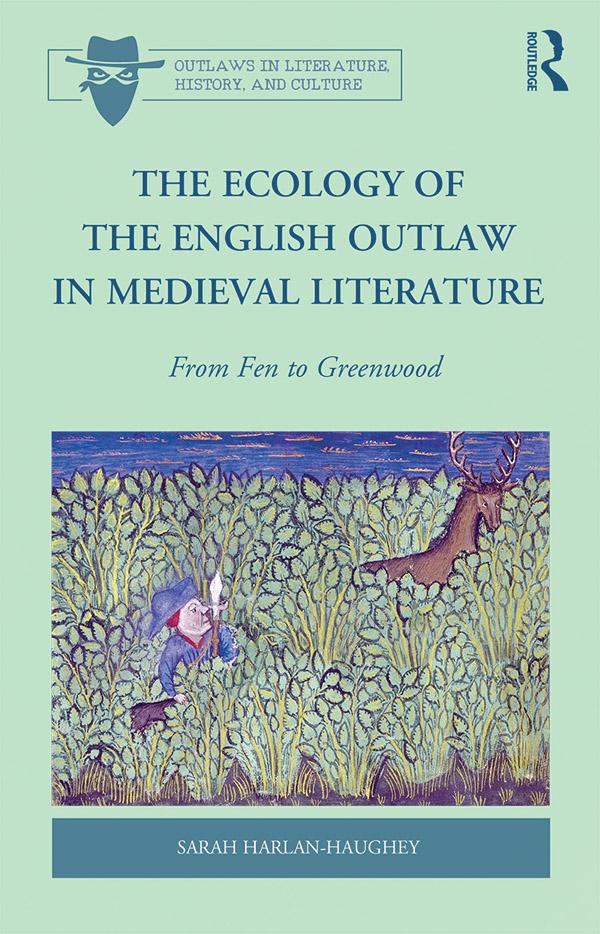
Arguing that outlaw narratives become particularly popular and poignant at moments of national ecological and political crisis, Sarah Harlan-Haughey examines the figure of the outlaw in Anglo-Saxon poetry and Old English exile lyrics such as Beowulf, works dealing with the life and actions of Hereward, the Anglo-Norman romance of Fulk Fitz Waryn, the Robin Hood ballads, and the Tale of Gamelyn. Although the outlaw's wilderness shelter changed dramatically from the menacing fens and forests of Anglo-Saxon England to the bright, known, and mapped greenwood of the late outlaw romances and ballads, Harlan-Haughey observes that the outlaw remained strongly animalistic, other, and liminal. His brutality points to a deep literary ambivalence towards wilderness and the animal, at the same time that figures such as the Anglo-Saxon resistance fighter Hereward, the brutal yet courtly Gamelyn, and Robin Hood often represent a lost England imagined as pristine and forested. In analyzing outlaw literature as a form of nature writing, Harlan-Haughey suggests that it often reveals more about medieval anxieties respecting humanity's place in nature than it does about the political realities of the period.
Betala smidigt med kort, Klarna, Apple Pay eller Google Pay. Är du inte nöjd har du alltid 14 dagars ångerrätt. Läs mer i våra villkor. Har du några frågor, mejla oss på hello@memmo.org.
Memmo gör det enklare att plugga – var du än är i världen. Hos oss samlar du kursböcker och smarta studieverktyg på ett och samma ställe: sammanfattningar, quiz, poddar och flashcards. Och så Ted, din studiekompis som svarar på allt du undrar. Över 50 000 studenter pluggar redan här – byggt för att du ska lära dig snabbare och stressa mindre.