
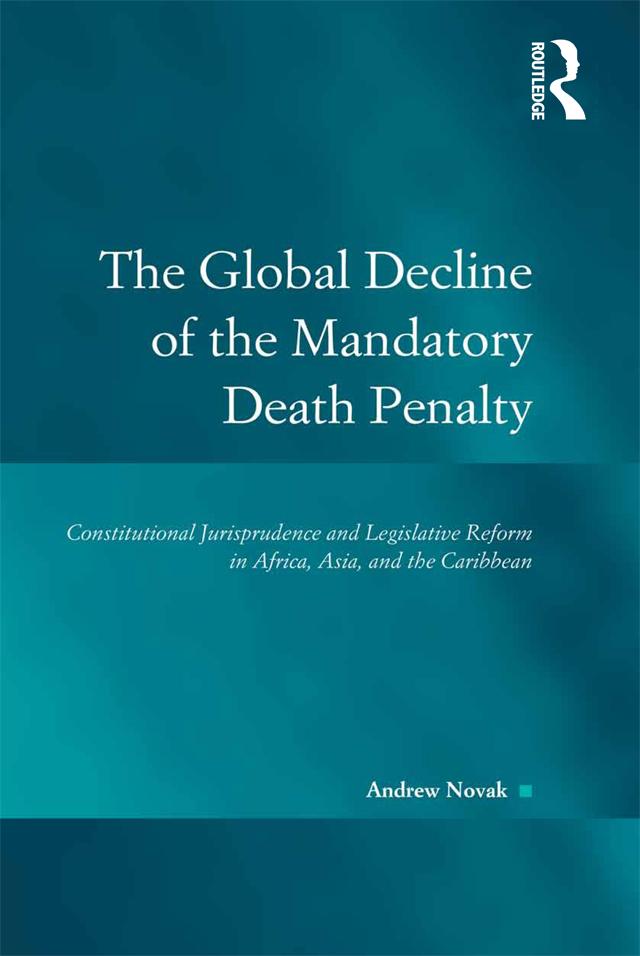
Historically, at English common law, the death penalty was mandatory for the crime of murder and other violent felonies. Over the last three decades, however, many former British colonies have reformed their capital punishment regimes to permit judicial sentencing discretion, including consideration of mitigating factors. Applying a comparative analysis to the law of capital punishment, Novak examines the constitutional jurisprudence and resulting legislative reform in the Caribbean, Sub-Saharan Africa, and South and Southeast Asia, focusing on the rapid retreat of the mandatory death penalty in the Commonwealth over the last thirty years. The coordinated mandatory death penalty challenges - which have had the consequence of greatly reducing the world’s death row population - represent a case study of how a small group of lawyers can sponsor human rights litigation that incorporates international human rights law into domestic constitutional jurisprudence, ultimately harmonizing criminal justice regimes across borders. This book is essential reading for anyone interested in the study and development of human rights and capital punishment, as well as those exploring the contours of comparative criminal justice.
Betala smidigt med kort, Klarna, Apple Pay eller Google Pay. Är du inte nöjd har du alltid 14 dagars ångerrätt. Läs mer i våra villkor. Har du några frågor, mejla oss på hello@memmo.org.
Memmo gör det enklare att plugga – var du än är i världen. Hos oss samlar du kursböcker och smarta studieverktyg på ett och samma ställe: sammanfattningar, quiz, poddar och flashcards. Och så Ted, din studiekompis som svarar på allt du undrar. Över 50 000 studenter pluggar redan här – byggt för att du ska lära dig snabbare och stressa mindre.
Du kanske också gillar
Köp boken0