
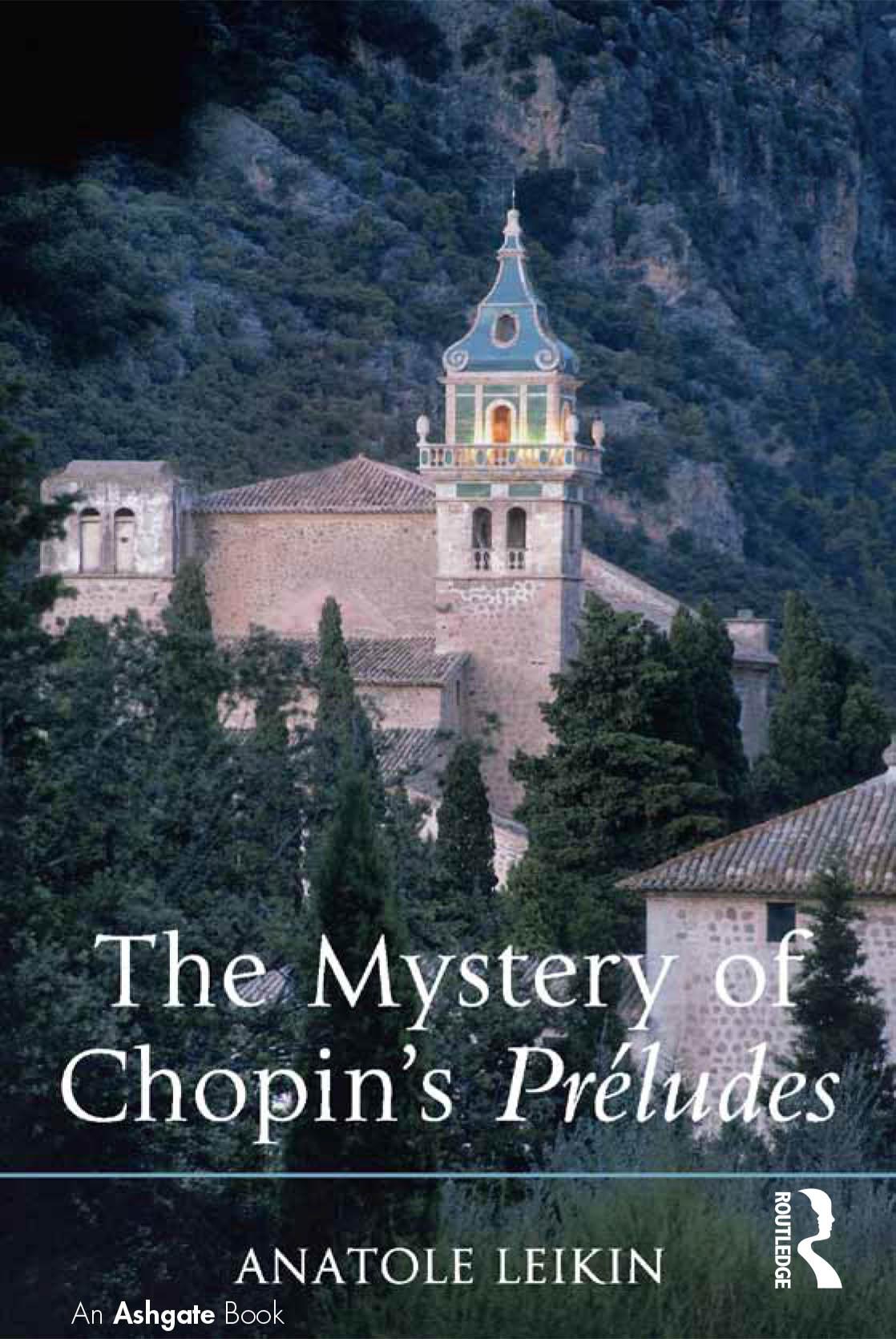
Chopin's twenty-four Préludes remain as mysterious today as when they were newly published. What prompted Franz Liszt and others to consider Chopin's Préludes to be compositions in their own right rather than introductions to other works? What did set Chopin's Préludes so drastically apart from their forerunners? What exactly was 'the morbid, the feverish, the repellent' that Schumann heard in Opus 28, in that 'wild motley' of 'strange sketches' and 'ruins'? Why did Liszt and another, anonymous, reviewer publicly suggest that Lamartine's poem Les Préludes served as an inspiration for Chopin's Opus 28? And, if that is indeed the case, how did the poem affect the structure and the thematic contents of Chopin's Préludes? And, lastly, is Opus 28 a random assortment of short pieces or a cohesive cycle? In this monograph, richly illustrated with musical examples, Anatole Leikin combines historical perspectives, hermeneutic and thematic analyses, and a range of practical implications for performers to explore these questions and illuminate the music of one of the best loved collections of music for the piano.
Betala smidigt med kort, Klarna, Apple Pay eller Google Pay. Är du inte nöjd har du alltid 14 dagars ångerrätt. Läs mer i våra villkor. Har du några frågor, mejla oss på hello@memmo.org.
Memmo gör det enklare att plugga – var du än är i världen. Hos oss samlar du kursböcker och smarta studieverktyg på ett och samma ställe: sammanfattningar, quiz, poddar och flashcards. Och så Ted, din studiekompis som svarar på allt du undrar. Över 50 000 studenter pluggar redan här – byggt för att du ska lära dig snabbare och stressa mindre.
Du kanske också gillar
Köp boken0