
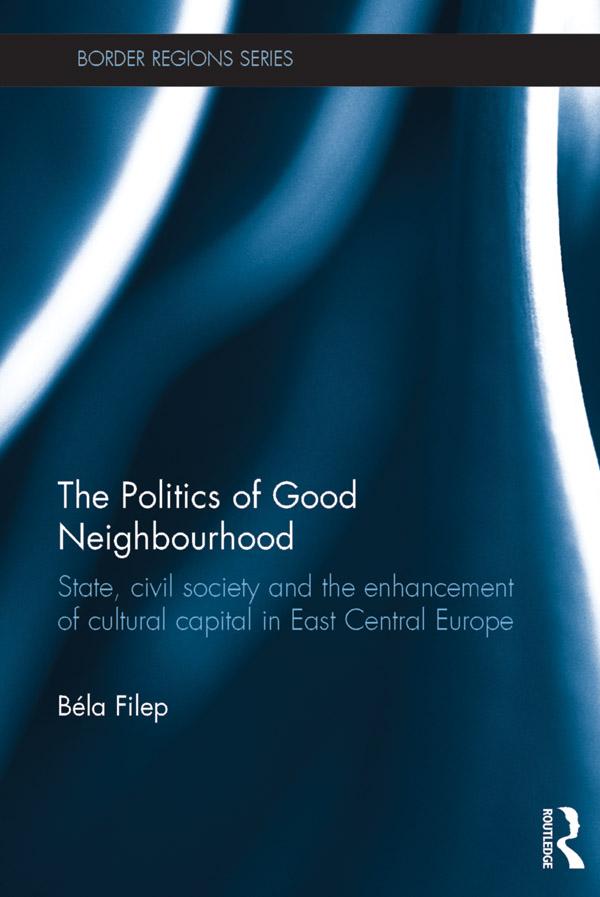
Analyzing neighbourly relations in multicultural societies, this book develops a concept of good neighbourhood and argues that cultural capital in various forms is the determining variable in building good-neighbourly relations. This work breaks new ground by offering a conceptual integration of different, mutually interdependent forms of capital: intercultural capital, cross- cultural social capital and multicultural capital. These forms of capital are linked to different educational and cultural policies of the state as well as to civil society involvement at different levels of implementation.
Grounded in extensive fieldwork, the book not only provides critical insights into neighbourly relations in culturally diverse border regions of East Central Europe, but the concept developed through a rich theoretical base can be usefully adapted and widely applied to other contexts.
Scholars and graduate- level students in geography, international relations, political science, social anthropology and sociology as well as policy practitioners with an interest in the negotiation of coexistence, minority issues and social and political cohesion in multicultural societies will find this an illuminating read.
Betala smidigt med kort, Klarna, Apple Pay eller Google Pay. Är du inte nöjd har du alltid 14 dagars ångerrätt. Läs mer i våra villkor. Har du några frågor, mejla oss på hello@memmo.org.
Memmo gör det enklare att plugga – var du än är i världen. Hos oss samlar du kursböcker och smarta studieverktyg på ett och samma ställe: sammanfattningar, quiz, poddar och flashcards. Och så Ted, din studiekompis som svarar på allt du undrar. Över 50 000 studenter pluggar redan här – byggt för att du ska lära dig snabbare och stressa mindre.