
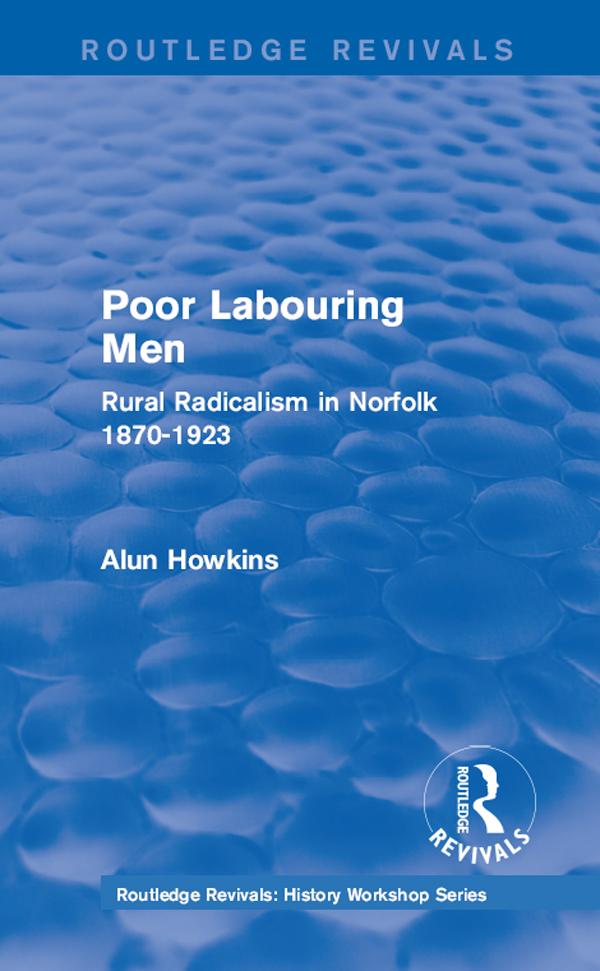
First published in 1985, this book presents the first detailed account of the relationship between the farmworkers, trades unionism, and political and social radicalism. Rural radicalism, one of the most important new features of late-nineteenth and early-twentieth century politics, was particularly strong in Norfolk and as such provides the focus for this study. The author shows the how relationship between ‘master and man’ and ‘man’ and ‘work’ was changing in the period from the 1870s to the 1920s — ending with the great strike of 1923. The main themes are the shifts from religion to politics, from Liberalism to Labour, and in more general terms from local to national consciousness. The book shows men at work and the ways in which politics meshed — or failed to mesh — together. Based on detailed local research and on many hours of recorded interviews, it enables the voice of the labourer to be heard, and a real sense of hope, fear and aspiration to come through.
Betala smidigt med kort, Klarna, Apple Pay eller Google Pay. Är du inte nöjd har du alltid 14 dagars ångerrätt. Läs mer i våra villkor. Har du några frågor, mejla oss på hello@memmo.org.
Memmo gör det enklare att plugga – var du än är i världen. Hos oss samlar du kursböcker och smarta studieverktyg på ett och samma ställe: sammanfattningar, quiz, poddar och flashcards. Och så Ted, din studiekompis som svarar på allt du undrar. Över 50 000 studenter pluggar redan här – byggt för att du ska lära dig snabbare och stressa mindre.