
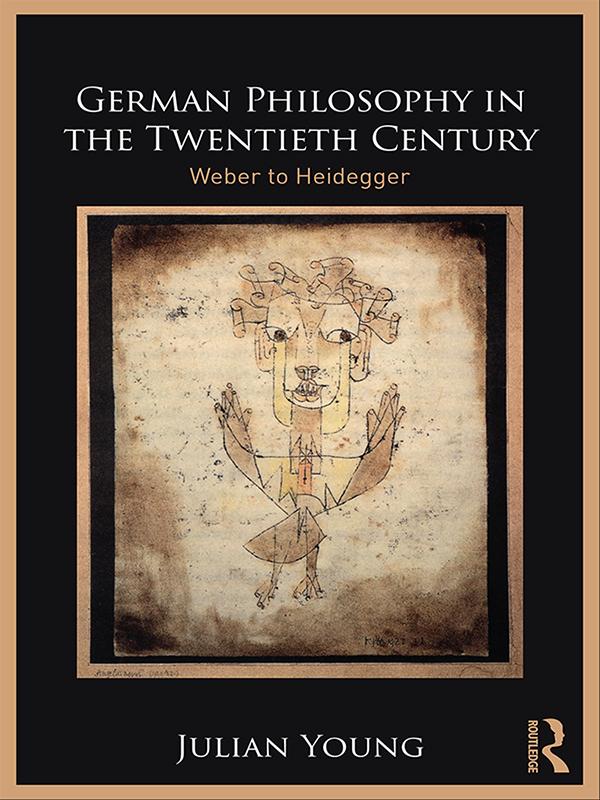
The course of German philosophy in the twentieth century is one of the most exciting, diverse and controversial periods in the history of human thought. It is widely studied and its legacy hotly contested.
In this outstanding introduction, Julian Young explains and assesses the two dominant traditions in modern German philosophy – critical theory and phenomenology – by examining the following key thinkers and topics:
- Max Weber’s setting the agenda for modern German philosophy: the ‘rationalization’ and ‘disenchantment’ of modernity resulting in ‘loss of freedom’ and ‘loss of meaning’
- Horkheimer and Adorno: rationalization and the ‘culture industry’
- Habermas’ defence of Enlightenment rationalization, the ‘unfinished project of modernity’
- Marcuse: a Freud-based vision of a repression-free utopia
- Husserl: overcoming the ‘crisis of humanity’ through phenomenology
- Early Heidegger’s existential phenomenology: ‘authenticity’ as loyalty to ‘heritage’
- Gadamer and ‘fusion of horizons’
- Arendt: the human condition
- Later Heidegger: the re-enchantment of reality.
German Philosophy in the Twentieth Century: Weber to Heidegger is essential reading for students of German philosophy, phenomenology and critical theory, and will also be of interest to students in related fields such as literature, religious studies, and political theory.
Betala smidigt med kort, Klarna, Apple Pay eller Google Pay. Är du inte nöjd har du alltid 14 dagars ångerrätt. Läs mer i våra villkor. Har du några frågor, mejla oss på hello@memmo.org.
Memmo gör det enklare att plugga – var du än är i världen. Hos oss samlar du kursböcker och smarta studieverktyg på ett och samma ställe: sammanfattningar, quiz, poddar och flashcards. Och så Ted, din studiekompis som svarar på allt du undrar. Över 50 000 studenter pluggar redan här – byggt för att du ska lära dig snabbare och stressa mindre.