
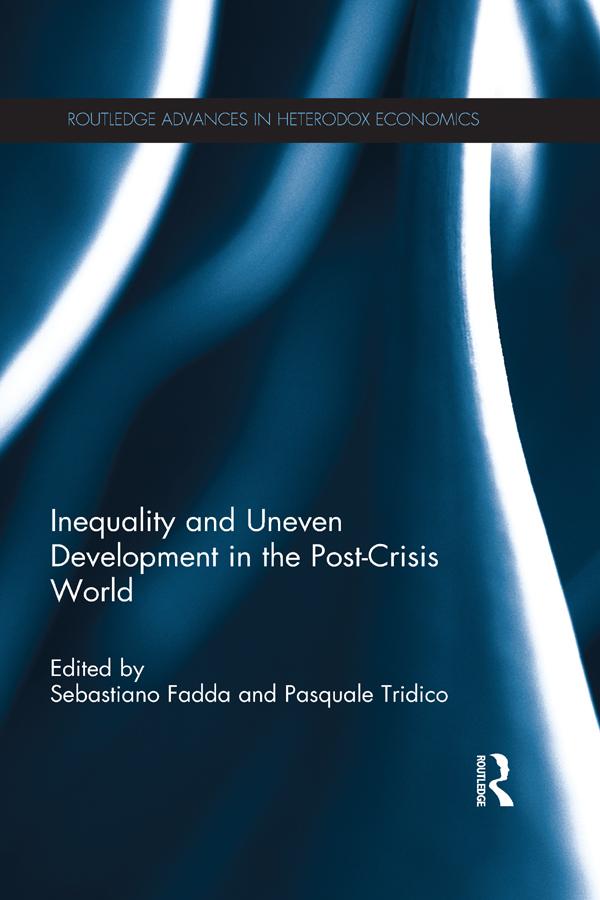
In the years following the financial crash, two issues have become central to the debate in economics: inequality and the uneven nature of sustainable development. These two issues are at the core of this book which aims to explain three key questions: why inequality has increased so much in the last three decades; why most advanced economies are stagnating or are experiencing moderate economic growth; and why, even where economic growth is occurring, the quality of that growth is questioned.
Inequality and Uneven Development in the Post-Crisis World is divided into three parts. The first part concerns the theoretical aspects of inequality, and ethical issues regarding economics and equality. The second part explores empirical evidence and policy suggestions drawing on the uneven levels of development and unprecedented levels of inequality experienced among advanced economies in the context of global financial capitalism. The third part focuses on sustainable development issues such as full employment, social costs of global trade liberalization, environmental sustainability and ecological issues. Along with inequality these issues are central for capitalism and for economic development.
This volume is of interest to those who study political economy, sustainable development and social inequality.
Betala smidigt med kort, Klarna, Apple Pay eller Google Pay. Är du inte nöjd har du alltid 14 dagars ångerrätt. Läs mer i våra villkor. Har du några frågor, mejla oss på hello@memmo.org.
Memmo gör det enklare att plugga – var du än är i världen. Hos oss samlar du kursböcker och smarta studieverktyg på ett och samma ställe: sammanfattningar, quiz, poddar och flashcards. Och så Ted, din studiekompis som svarar på allt du undrar. Över 50 000 studenter pluggar redan här – byggt för att du ska lära dig snabbare och stressa mindre.