
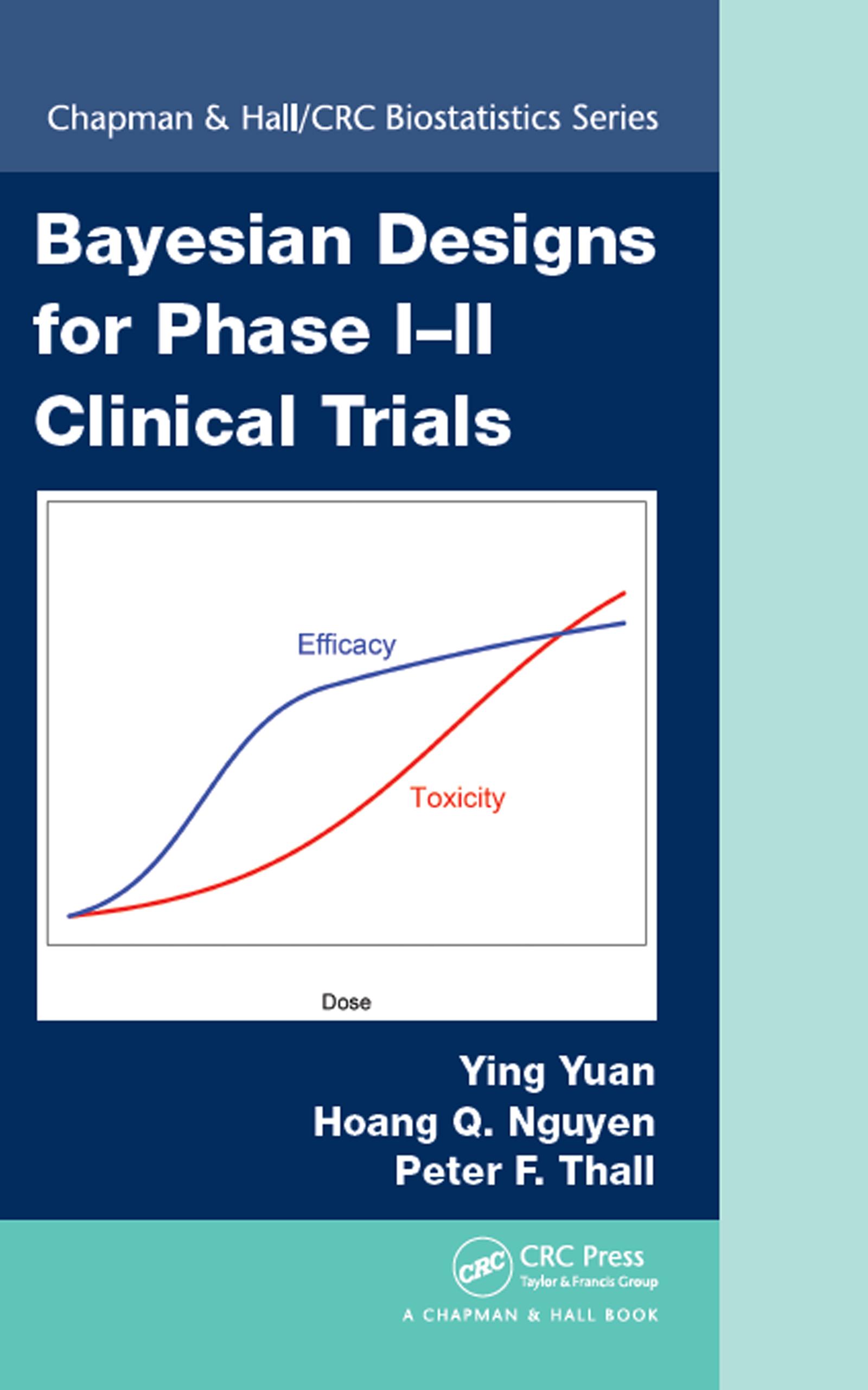
Reliably optimizing a new treatment in humans is a critical first step in clinical evaluation since choosing a suboptimal dose or schedule may lead to failure in later trials. At the same time, if promising preclinical results do not translate into a real treatment advance, it is important to determine this quickly and terminate the clinical evaluation process to avoid wasting resources.
Bayesian Designs for Phase I–II Clinical Trials describes how phase I–II designs can serve as a bridge or protective barrier between preclinical studies and large confirmatory clinical trials. It illustrates many of the severe drawbacks with conventional methods used for early-phase clinical trials and presents numerous Bayesian designs for human clinical trials of new experimental treatment regimes.
Written by research leaders from the University of Texas MD Anderson Cancer Center, this book shows how Bayesian designs for early-phase clinical trials can explore, refine, and optimize new experimental treatments. It emphasizes the importance of basing decisions on both efficacy and toxicity.
Betala smidigt med kort, Klarna, Apple Pay eller Google Pay. Är du inte nöjd har du alltid 14 dagars ångerrätt. Läs mer i våra villkor. Har du några frågor, mejla oss på hello@memmo.org.
Memmo gör det enklare att plugga – var du än är i världen. Hos oss samlar du kursböcker och smarta studieverktyg på ett och samma ställe: sammanfattningar, quiz, poddar och flashcards. Och så Ted, din studiekompis som svarar på allt du undrar. Över 50 000 studenter pluggar redan här – byggt för att du ska lära dig snabbare och stressa mindre.