
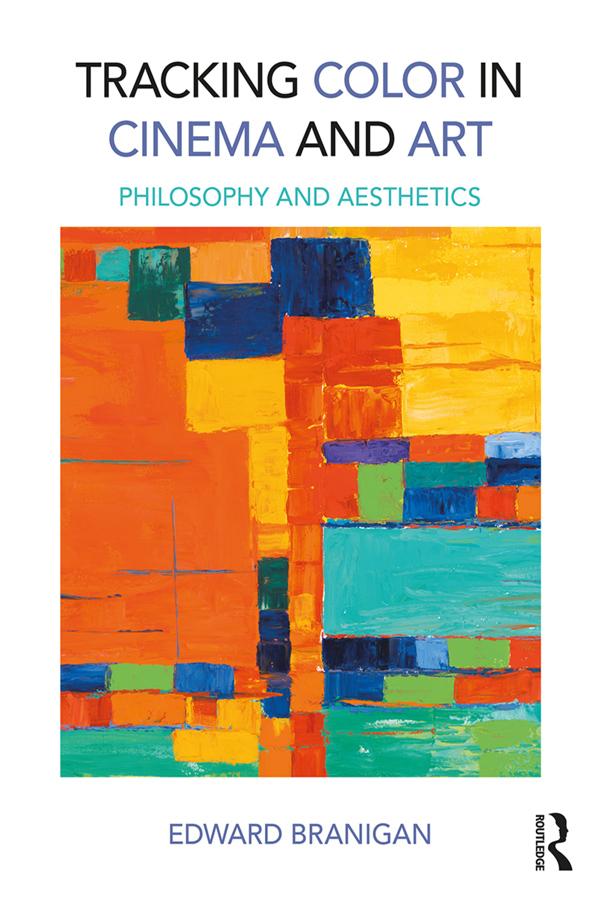
Color is one of cinema’s most alluring formal systems, building on a range of artistic traditions that orchestrate visual cues to tell stories, stage ideas, and elicit feelings. But what if color is not—or not only—a formal system, but instead a linguistic effect, emerging from the slipstream of our talk and embodiment in a world? This book develops a compelling framework from which to understand the mobility of color in art and mind, where color impressions are seen through, and even governed by, patterns of ordinary language use, schemata, memories, and narrative.
Edward Branigan draws on the work of Ludwig Wittgenstein and other philosophers who struggle valiantly with problems of color aesthetics, contemporary theories of film and narrative, and art-historical models of analysis. Examples of a variety of media, from American pop art to contemporary European cinema, illustrate a theory based on a spectator’s present-time tracking of temporal patterns that are firmly entwined with language use and social intelligence.
Betala smidigt med kort, Klarna, Apple Pay eller Google Pay. Är du inte nöjd har du alltid 14 dagars ångerrätt. Läs mer i våra villkor. Har du några frågor, mejla oss på hello@memmo.org.
Memmo gör det enklare att plugga – var du än är i världen. Hos oss samlar du kursböcker och smarta studieverktyg på ett och samma ställe: sammanfattningar, quiz, poddar och flashcards. Och så Ted, din studiekompis som svarar på allt du undrar. Över 50 000 studenter pluggar redan här – byggt för att du ska lära dig snabbare och stressa mindre.