
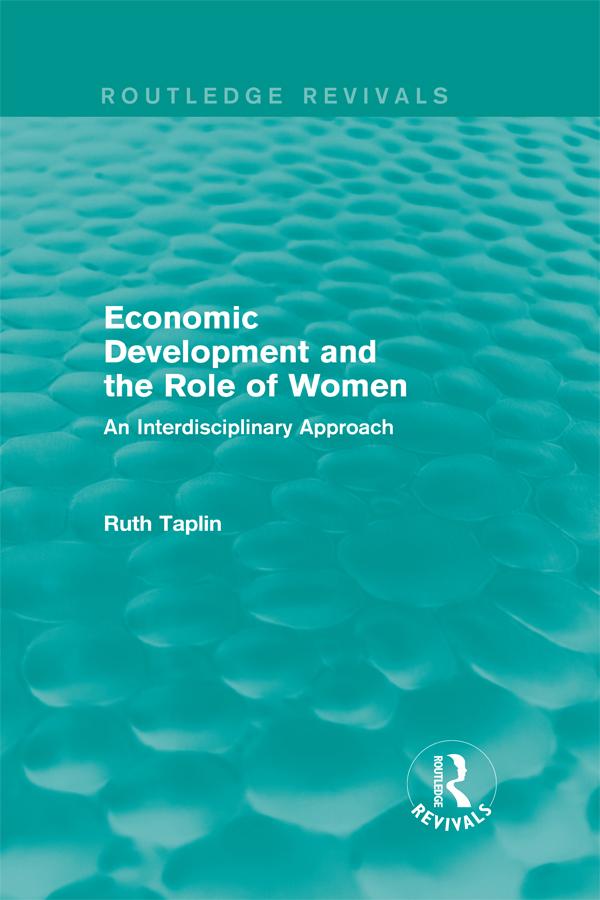
First published in 1989, this book provides a macro-micro approach to economic development — taking account of multi-level linkages, both inter and intra, that had been missed by previous analyses. The author argues that these linkages demonstrate that social and economic change may occur from the "bottom up" household/family level and not just from the "top down" economic order level — using women as a vehicle to illustrate this. In the first section, the expansive body of development literature is summarised and critically reviewed — isolating the primary strengths and weaknesses. Case studies of Malaysia, the Chinese Commune and the Israeli Kibbutz demonstrate that a theory which combines the analysis of the organisation of work, kinship and ethnicity can accommodate the experience of women in an integrated manner that traditional development theory has failed to achieve.
Betala smidigt med kort, Klarna, Apple Pay eller Google Pay. Är du inte nöjd har du alltid 14 dagars ångerrätt. Läs mer i våra villkor. Har du några frågor, mejla oss på hello@memmo.org.
Memmo gör det enklare att plugga – var du än är i världen. Hos oss samlar du kursböcker och smarta studieverktyg på ett och samma ställe: sammanfattningar, quiz, poddar och flashcards. Och så Ted, din studiekompis som svarar på allt du undrar. Över 50 000 studenter pluggar redan här – byggt för att du ska lära dig snabbare och stressa mindre.