
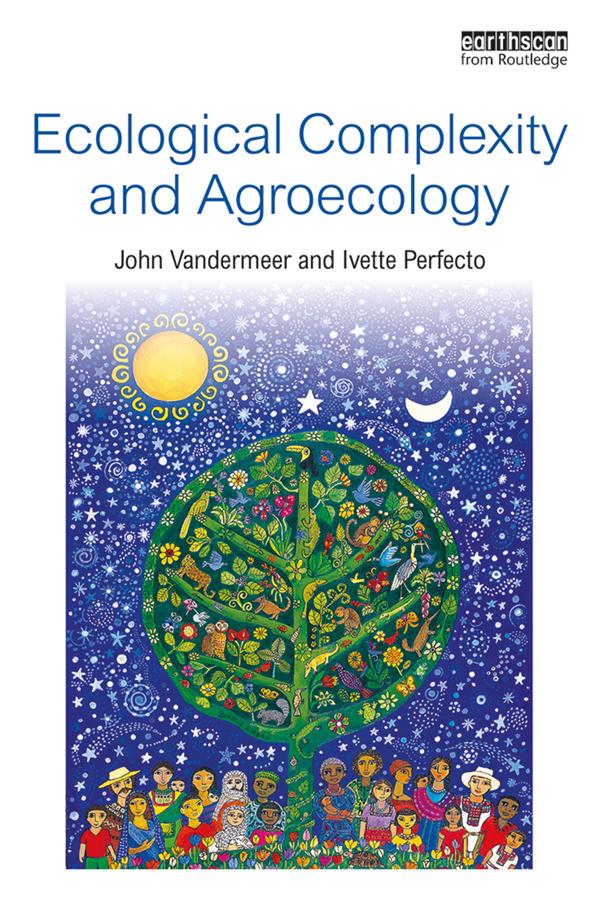
This text reflects the immense current growth in interest in agroecology and changing approaches to it. While it is acknowledged that the science of ecology should be the basis of agroecological planning, many analysts have out-of-date ideas about contemporary ecology. Ecology has come a long way since the old days of "the balance of nature" and other romantic notions of how ecological systems function. In this context, the new science of complexity has become extremely important in the modern science of ecology. The problem is that it tends to be too mathematical and technical and thus off-putting for the average student of agroecology, especially those new to the subject. Therefore this book seeks to present ideas about ecological complexity with a minimum of formal mathematics.
The book’s organization consists of an introductory chapter, and a second chapter providing some of the background to basic ecological topics as they are relevant to agroecosystrems (e.g., soil biology and pest control). The core of the book consists of seven chapters on key intersecting themes of ecological complexity, including issues such as spatial patterns, network theory and tipping points, illustrated by examples from agroecology and agricultural systems from around the world.
Betala smidigt med kort, Klarna, Apple Pay eller Google Pay. Är du inte nöjd har du alltid 14 dagars ångerrätt. Läs mer i våra villkor. Har du några frågor, mejla oss på hello@memmo.org.
Memmo gör det enklare att plugga – var du än är i världen. Hos oss samlar du kursböcker och smarta studieverktyg på ett och samma ställe: sammanfattningar, quiz, poddar och flashcards. Och så Ted, din studiekompis som svarar på allt du undrar. Över 50 000 studenter pluggar redan här – byggt för att du ska lära dig snabbare och stressa mindre.