
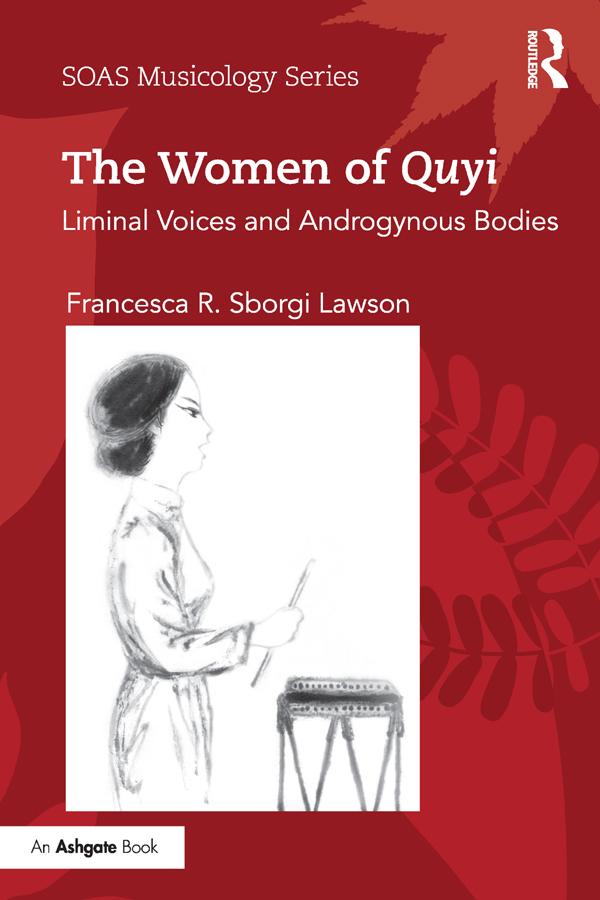
Why has the female voice—as the resonant incarnation of the female body—inspired both fascination and ambivalence? Why were women restricted from performing on the Chinese public stage? How have female roles and voices been appropriated by men throughout much of the history of Chinese theatre? Why were the women of quyi—a community of Chinese female singers in Republican Tianjin—able to become successful, respected artists when other female singers and actors in competing performance traditions struggled for acceptance? Drawing substantially on original ethnographic fieldwork conducted in the 1980s and 1990s, Francesca R. Sborgi Lawson offers answers to these questions and demonstrates how the women of quyi successfully negotiated their sexuality and vocality in performance. Owing to their role as third-person narrators, the women of quyi bridged the gender gap, creating an androgynous persona that de-emphasized their feminine appearance and, at the same time, allowed them to showcase their female voices on public stages—places that had been previously unwelcoming to female artists. This is a story about female storytellers who sang their way to respectability and social change in the early decades of the twentieth century by minimizing their bodies in order to allow their voices to be heard.
Betala smidigt med kort, Klarna, Apple Pay eller Google Pay. Är du inte nöjd har du alltid 14 dagars ångerrätt. Läs mer i våra villkor. Har du några frågor, mejla oss på hello@memmo.org.
Memmo gör det enklare att plugga – var du än är i världen. Hos oss samlar du kursböcker och smarta studieverktyg på ett och samma ställe: sammanfattningar, quiz, poddar och flashcards. Och så Ted, din studiekompis som svarar på allt du undrar. Över 50 000 studenter pluggar redan här – byggt för att du ska lära dig snabbare och stressa mindre.