
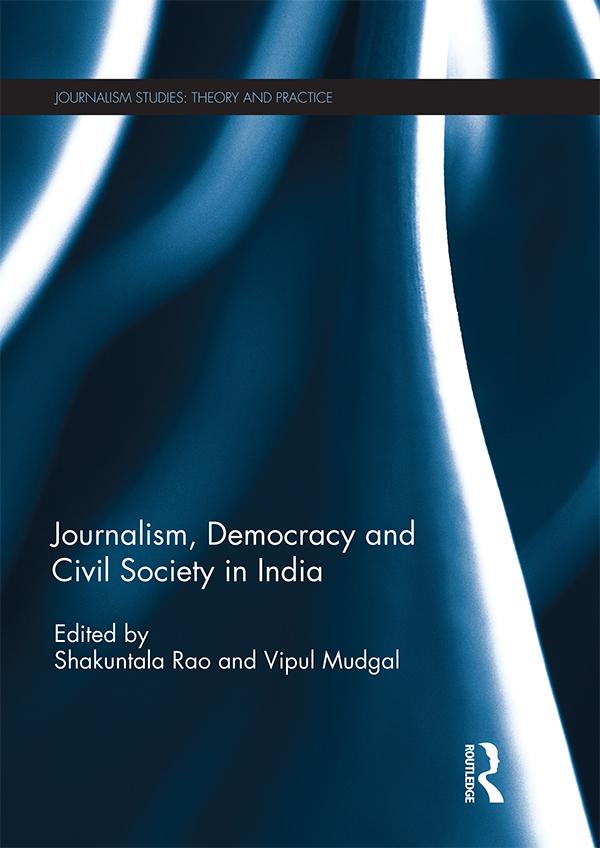
Since independence in 1947 India has remained a stable and functioning democracy in the face of enormous challenges. Amid a variety of interlinking contraries and a burgeoning media – one of the largest in the world – there has been a serious dearth of scholarship on the role of journalists and dramatically changing journalism practices. This book brings together some of the best known scholars on Indian journalism to ask questions such as: Can the plethora of privately run cable news channels provide the discursive space needed to strengthen the practices of democracy, not just inform results from the ballot boxes? Can neoliberal media ownership patterns provide space for a critical and free journalistic culture to evolve? What are the ethical challenges editors and journalists face on a day-to-day basis in a media industry which has exploded? In answering some of these questions, the contributors to this volume are equally sensitive to the historical, social, and cultural context in which Indian journalism evolved, but they do not all reach the same conclusion about the role of journalism in Indian civil society and democracy. This book was originally published as a special issue of Journalism Studies.
Betala smidigt med kort, Klarna, Apple Pay eller Google Pay. Är du inte nöjd har du alltid 14 dagars ångerrätt. Läs mer i våra villkor. Har du några frågor, mejla oss på hello@memmo.org.
Memmo gör det enklare att plugga – var du än är i världen. Hos oss samlar du kursböcker och smarta studieverktyg på ett och samma ställe: sammanfattningar, quiz, poddar och flashcards. Och så Ted, din studiekompis som svarar på allt du undrar. Över 50 000 studenter pluggar redan här – byggt för att du ska lära dig snabbare och stressa mindre.