
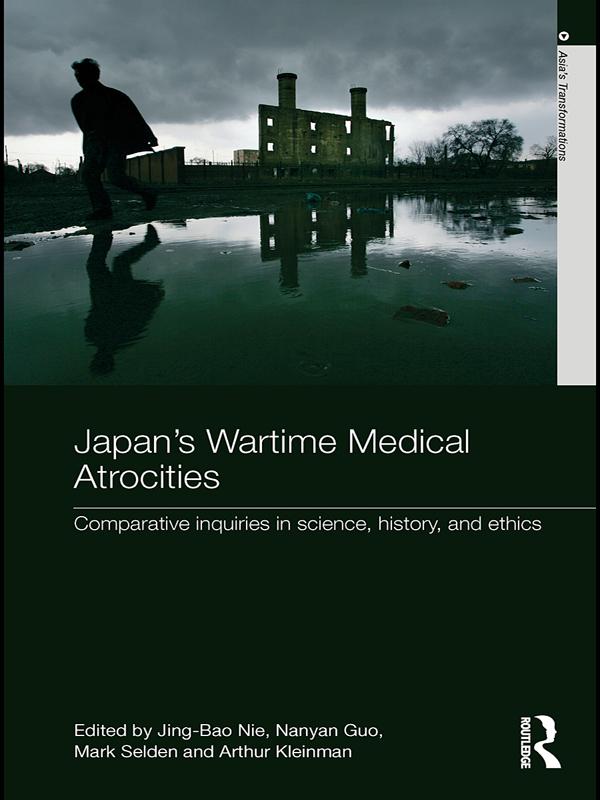
Prior to and during the Second World War, the Japanese Army established programs of biological warfare throughout China and elsewhere. In these “factories of death,” including the now-infamous Unit 731, Japanese doctors and scientists conducted large numbers of vivisections and experiments on human beings, mostly Chinese nationals. However, as a result of complex historical factors including an American cover-up of the atrocities, Japanese denials, and inadequate responses from successive Chinese governments, justice has never been fully served. This volume brings together the contributions of a group of scholars from different countries and various academic disciplines. It examines Japan’s wartime medical atrocities and their postwar aftermath from a comparative perspective and inquires into perennial issues of historical memory, science, politics, society and ethics elicited by these rebarbative events. The volume’s central ethical claim is that the failure to bring justice to bear on the systematic abuse of medical research by Japanese military medical personnel more than six decades ago has had a profoundly retarding influence on the development and practice of medical and social ethics in all of East Asia. The book also includes an extensive annotated bibliography selected from relevant publications in Japanese, Chinese and English.
Betala smidigt med kort, Klarna, Apple Pay eller Google Pay. Är du inte nöjd har du alltid 14 dagars ångerrätt. Läs mer i våra villkor. Har du några frågor, mejla oss på hello@memmo.org.
Memmo gör det enklare att plugga – var du än är i världen. Hos oss samlar du kursböcker och smarta studieverktyg på ett och samma ställe: sammanfattningar, quiz, poddar och flashcards. Och så Ted, din studiekompis som svarar på allt du undrar. Över 50 000 studenter pluggar redan här – byggt för att du ska lära dig snabbare och stressa mindre.
Du kanske också gillar
Köp boken0