
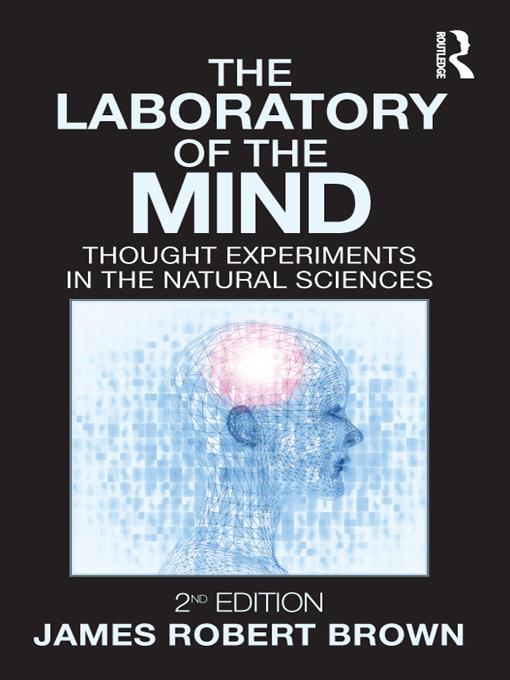
Newton's bucket, Einstein's elevator, Schrödinger's cat – these are some of the best-known examples of thought experiments in the natural sciences. But what function do these experiments perform? Are they really experiments at all? Can they help us gain a greater understanding of the natural world? How is it possible that we can learn new things just by thinking?
In this revised and updated new edition of his classic text The Laboratory of the Mind, James Robert Brown continues to defend apriorism in the physical world. This edition features two new chapters, one on “counter thought experiments” and another on the development of inertial motion. With plenty of illustrations and updated coverage of the debate between Platonic rationalism and classic empiricism, this is a lively and engaging contribution to the field of philosophy of science.
Betala smidigt med kort, Klarna, Apple Pay eller Google Pay. Är du inte nöjd har du alltid 14 dagars ångerrätt. Läs mer i våra villkor. Har du några frågor, mejla oss på hello@memmo.org.
Memmo gör det enklare att plugga – var du än är i världen. Hos oss samlar du kursböcker och smarta studieverktyg på ett och samma ställe: sammanfattningar, quiz, poddar och flashcards. Och så Ted, din studiekompis som svarar på allt du undrar. Över 50 000 studenter pluggar redan här – byggt för att du ska lära dig snabbare och stressa mindre.