
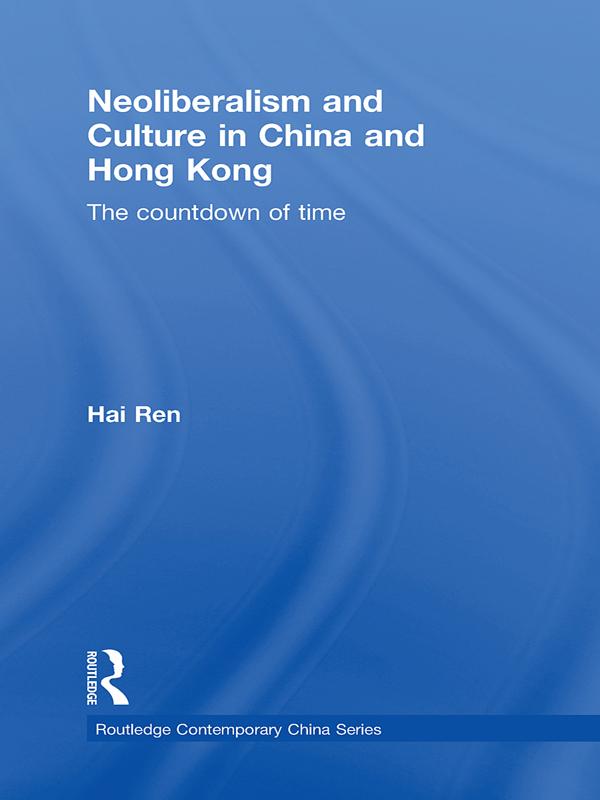
This book examines the period leading up to the Hong Kong handover in 1997 - the 'countdown of time', and by using iconic cultural symbols such as the countdown clock, the Hong Kong Museum exhibitions and cultural heritage sites, argues that China has undergone a transition to neoliberal state, in part through its reunification with Hong Kong.
The problem of synchronization with the world, a Chinese phrase that epitomizes China's engagement with modern capitalism since the first Opium War, was characterized throughout the 20th century as a 'humiliation', 'weakness', 'tragedy' and 'disaster', with China in the role of the victim of capitalist globalization. During the reunification with Hong Kong, these conventional expressions were replaced by new ones such as 'de-humiliation', 'return', 'self-esteem' and 'revival'. Hai Ren gives an ethnographic and historical analysis of this cultural and political transformation of China's globalization experience by looking closely at public history practices in mainland China and Hong Kong and how the reconfiguration of everyday life and cultural norms led to the development of this neoliberal China.
As a book which straddles Chinese and Hong Kong, history, politics, cultural heritage and museum studies more generally, it can be regarded as a work of cultural political economy which will appeal to students and scholars of all of the above.
Betala smidigt med kort, Klarna, Apple Pay eller Google Pay. Är du inte nöjd har du alltid 14 dagars ångerrätt. Läs mer i våra villkor. Har du några frågor, mejla oss på hello@memmo.org.
Memmo gör det enklare att plugga – var du än är i världen. Hos oss samlar du kursböcker och smarta studieverktyg på ett och samma ställe: sammanfattningar, quiz, poddar och flashcards. Och så Ted, din studiekompis som svarar på allt du undrar. Över 50 000 studenter pluggar redan här – byggt för att du ska lära dig snabbare och stressa mindre.