
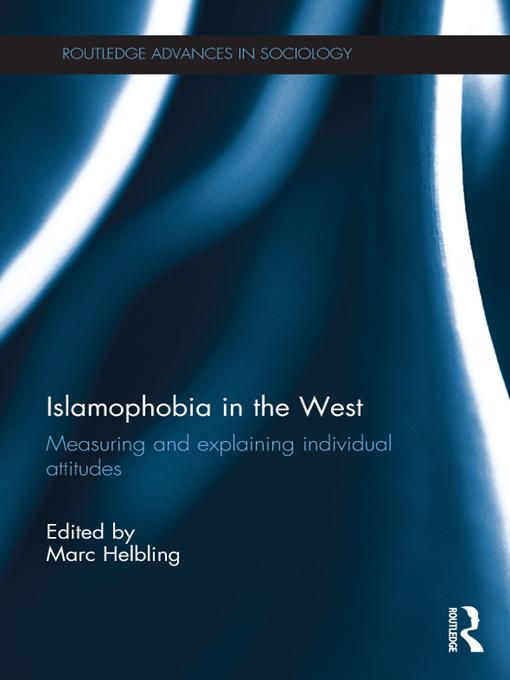
Since the late 1980s, growing migration from countries with a Muslim cultural background, and increasing Islamic fundamentalism related to terrorist attacks in Western Europe and the US, have created a new research field investigating the way states and ordinary citizens react to these new phenomena. However, whilst we already know much about how Islam finds its place in Western Europe and North America, and how states react to Muslim migration, we know surprisingly little about the attitudes of ordinary citizens towards Muslim migrants and Islam. Islamophobia has only recently started to be addressed by social scientists.
With contributions by leading researchers from many countries in Western Europe and North America, this book brings a new, transatlantic perspective to this growing field and establishes an important basis for further research in the area. It addresses several essential questions about Islamophobia, including:
- what exactly is Islamophobia and how can we measure it?
- how is it related to similar social phenomena, such as xenophobia?
- how widespread are Islamophobic attitudes, and how can they be explained?
- how are Muslims different from other outgroups and what role does terrorism and 9/11 play?
Islamophobia in the West will be of interest to students and scholars of sociology, religious studies, social psychology, political science, ethnology, and legal science.
Betala smidigt med kort, Klarna, Apple Pay eller Google Pay. Är du inte nöjd har du alltid 14 dagars ångerrätt. Läs mer i våra villkor. Har du några frågor, mejla oss på hello@memmo.org.
Memmo gör det enklare att plugga – var du än är i världen. Hos oss samlar du kursböcker och smarta studieverktyg på ett och samma ställe: sammanfattningar, quiz, poddar och flashcards. Och så Ted, din studiekompis som svarar på allt du undrar. Över 50 000 studenter pluggar redan här – byggt för att du ska lära dig snabbare och stressa mindre.